

South African Recipes: My Collection of Classics and Favourites
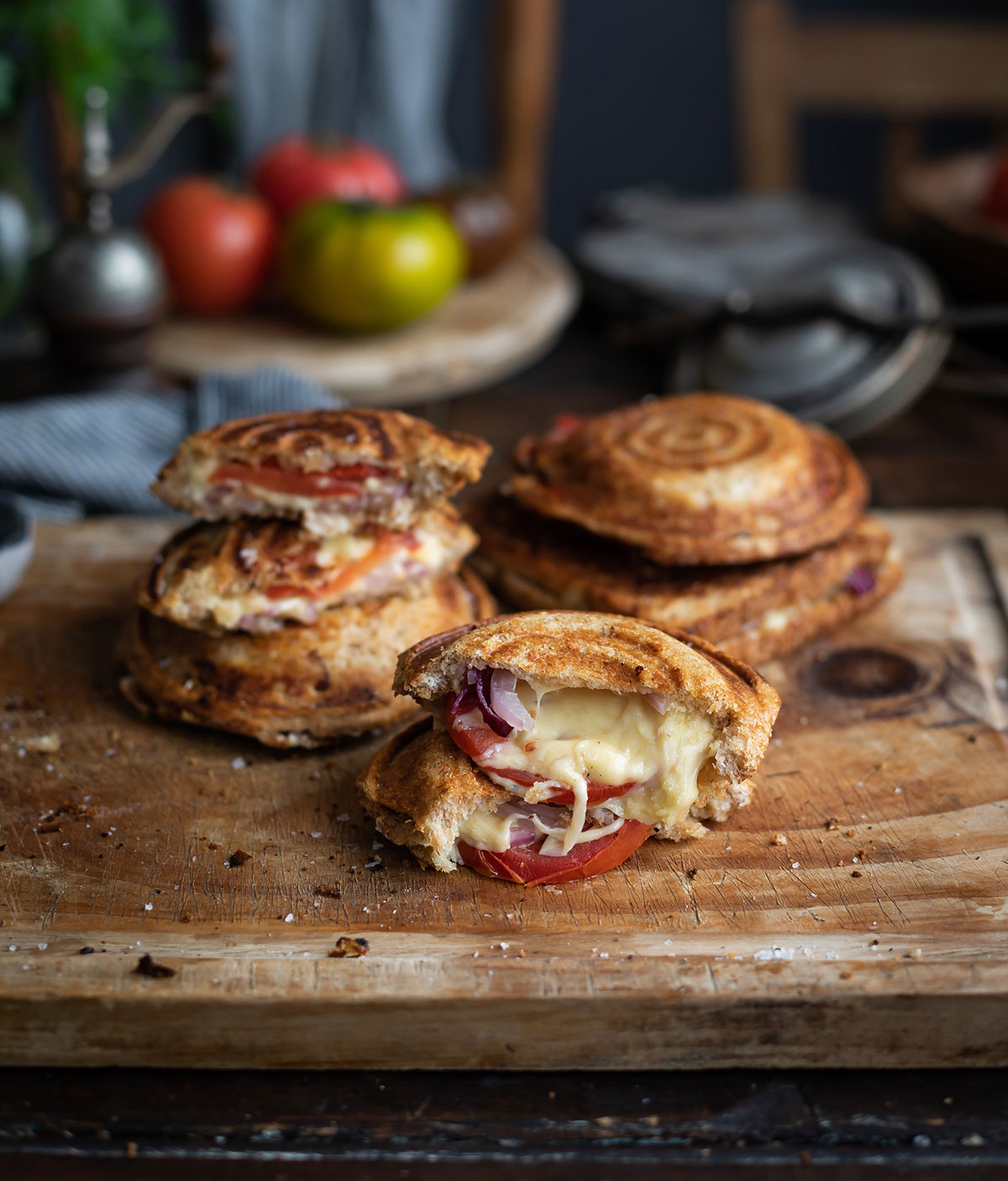
South Africa has one of the most complex and layered food cultures in the world, shaped by Nguni and Sotho traditions, Cape Malay cooking, Afrikaans farm food, Indian South African cuisine, and influences that stretch back centuries before colonisation. I want to be clear that this collection of South African recipes doesn’t represent all of that. It represents the food I grew up with, the recipes I’ve developed over 14 years of cooking for this website, and the dishes from this country that I know well enough to write about honestly. There is far more South African food than what’s gathered here, and I’d encourage you to explore beyond this site.
Please do let me know in the comments if there are any particular South African Recipes you would love to see. I will keep adding to this list as I go.

FAQs About South African Food
What is traditional South African food?
Traditional South African food is harder to define than most people expect. South Africa doesn’t have a single food culture. It has many. The country’s cooking is shaped by Indigenous Nguni and Sotho traditions, Cape Malay cuisine brought by enslaved people from Southeast Asia in the 17th century, Afrikaans farm cooking, Indian South African food rooted in KwaZulu-Natal, and Portuguese influences that came through Mozambique. In practice, what most people think of as South African food draws from the Afrikaans and Cape Malay traditions: slow-braised meats, baked puddings, spiced stews, and a baking culture built around rusks, crunchies, and milk tart. These are the recipes I know best. They’re also what you’ll find on this site.
What is a braai and how is it different from a barbecue?
A braai is South Africa’s version of the barbecue, but calling it that undersells it considerably. A barbecue is a cooking method. A braai is a social institution. South Africans braai year-round, regardless of weather, on wood rather than gas wherever possible. The fire itself is as much the point as the food. The cuts of meat are different too. Boerewors, a spiced farmer’s sausage made with coarsely ground beef and pork, is the centrepiece. Sosaties, lamb chops, and chicken pieces round out the spread. The braai is central enough to South African culture that 24 September, Heritage Day, is known colloquially as National Braai Day.
What is bobotie?
Bobotie is often described as South Africa’s national dish. It comes from Cape Malay cuisine and is one of the most distinctive dishes in the country’s food culture. At its core, it’s a spiced minced meat bake, usually beef or lamb, seasoned with curry powder, turmeric, dried fruit, and apricot jam. On top sits a savoury egg and milk custard that sets in the oven. The combination of sweet and savoury, fruit and spice, is characteristic of Cape Malay cooking. It’s unlike anything else I know. It’s served with yellow rice and chutney, reheats beautifully, and feeds a large group without much fuss.
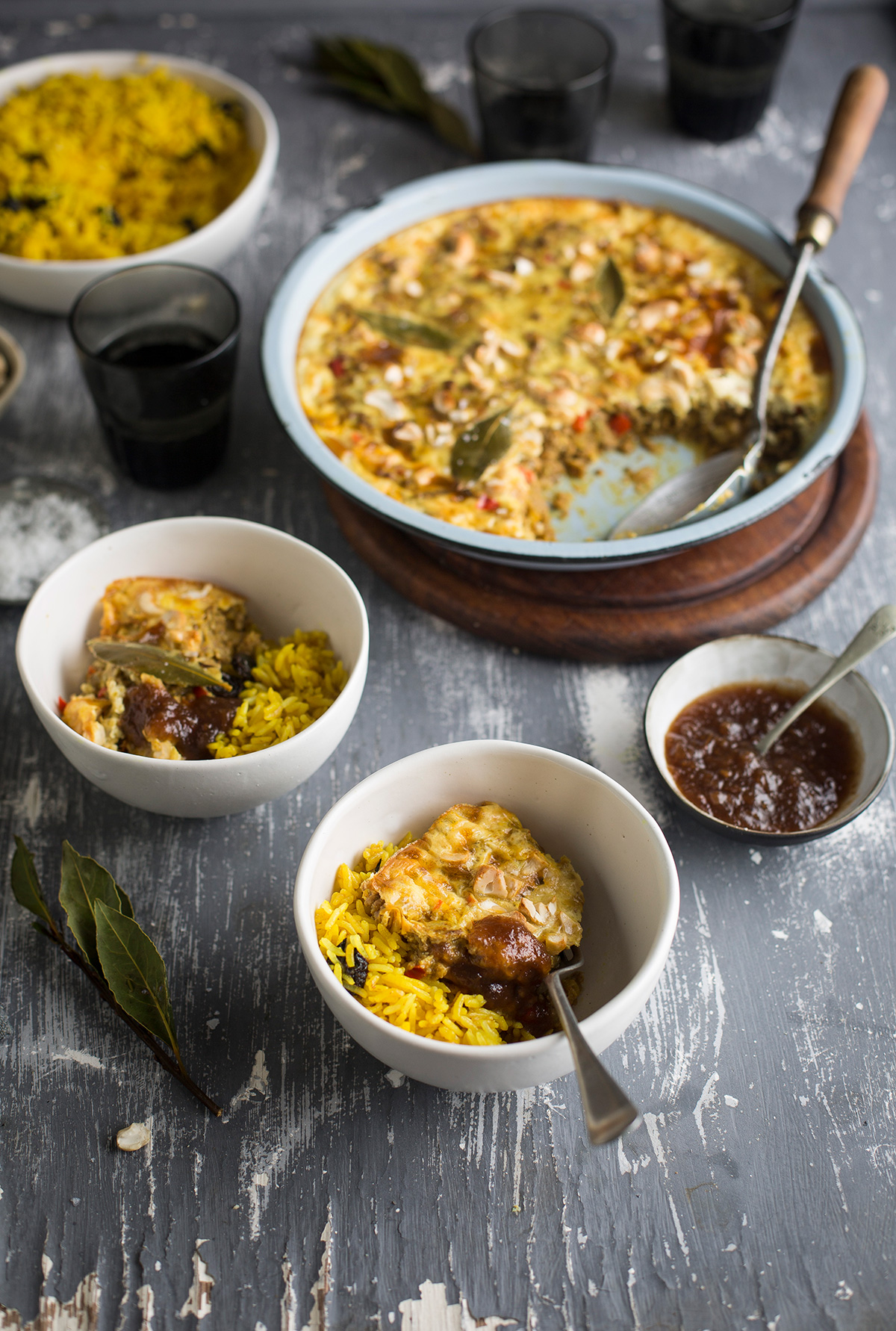
What is malva pudding?
Malva pudding is a warm, spongy baked pudding made with apricot jam and a touch of vinegar. The moment it comes out of the oven, it gets soaked in a hot butter and cream sauce. That sauce absorbs into the sponge, turning it sticky, glossy, and completely irresistible. It appears at almost every South African celebration table, from birthday dinners to Christmas lunch. My chocolate malva pudding takes the classic one step further, adding dark cocoa to the batter for a richer, deeper result.
What is a milk tart (melktert)?
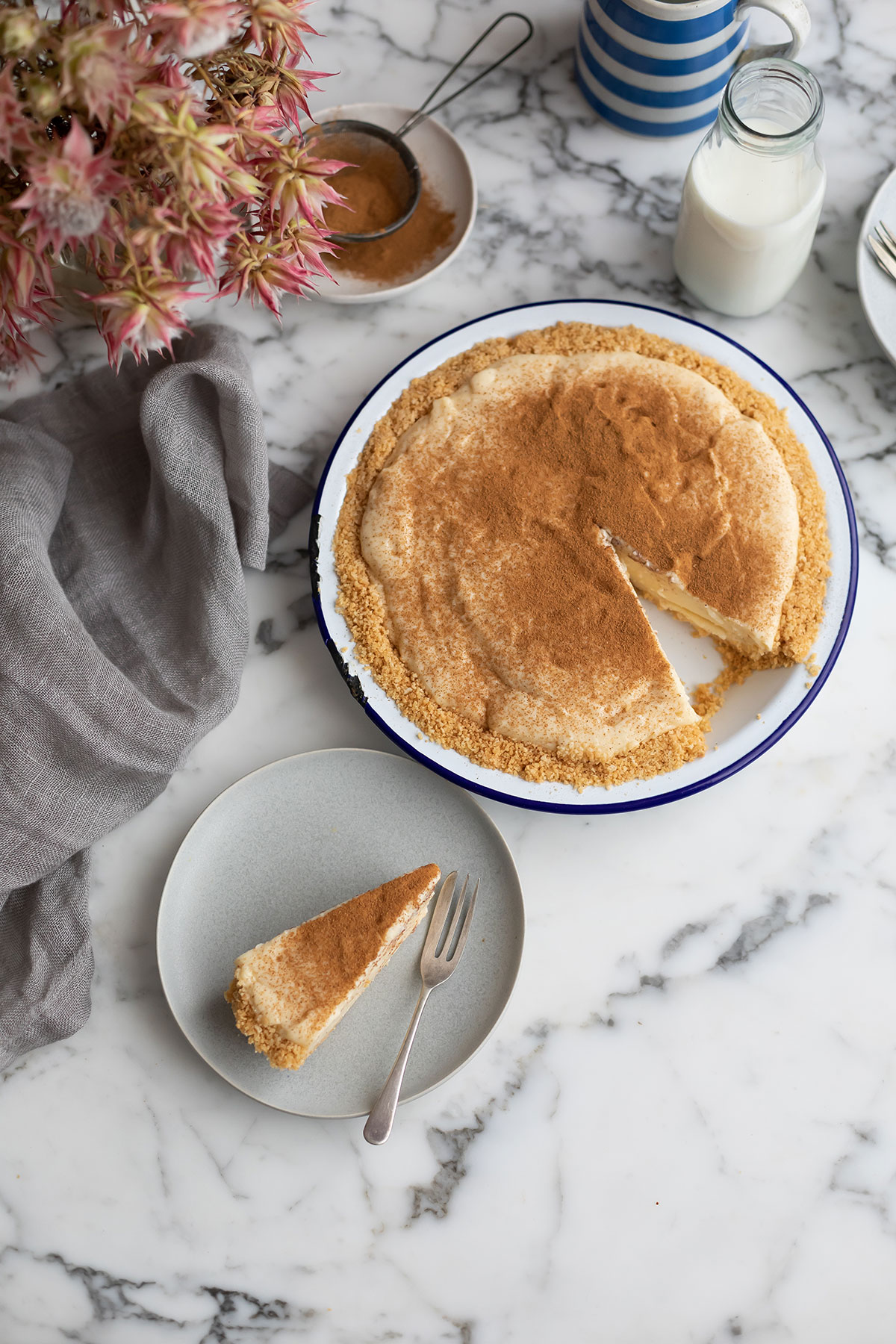
Milk tart, or melktert in Afrikaans, is South Africa’s most beloved dessert. Unlike a French custard tart, it’s made with milk rather than cream, which gives it a delicate, almost silky texture. It sits in a biscuit or pastry crust and finishes with a generous dusting of cinnamon. The unbaked version, where the filling sets in the fridge rather than baking in the oven, is the one many South Africans grew up with. It’s also the one I make most often. My classic unbaked milk tart is one of the most loved recipes on this site.
What are rusks?
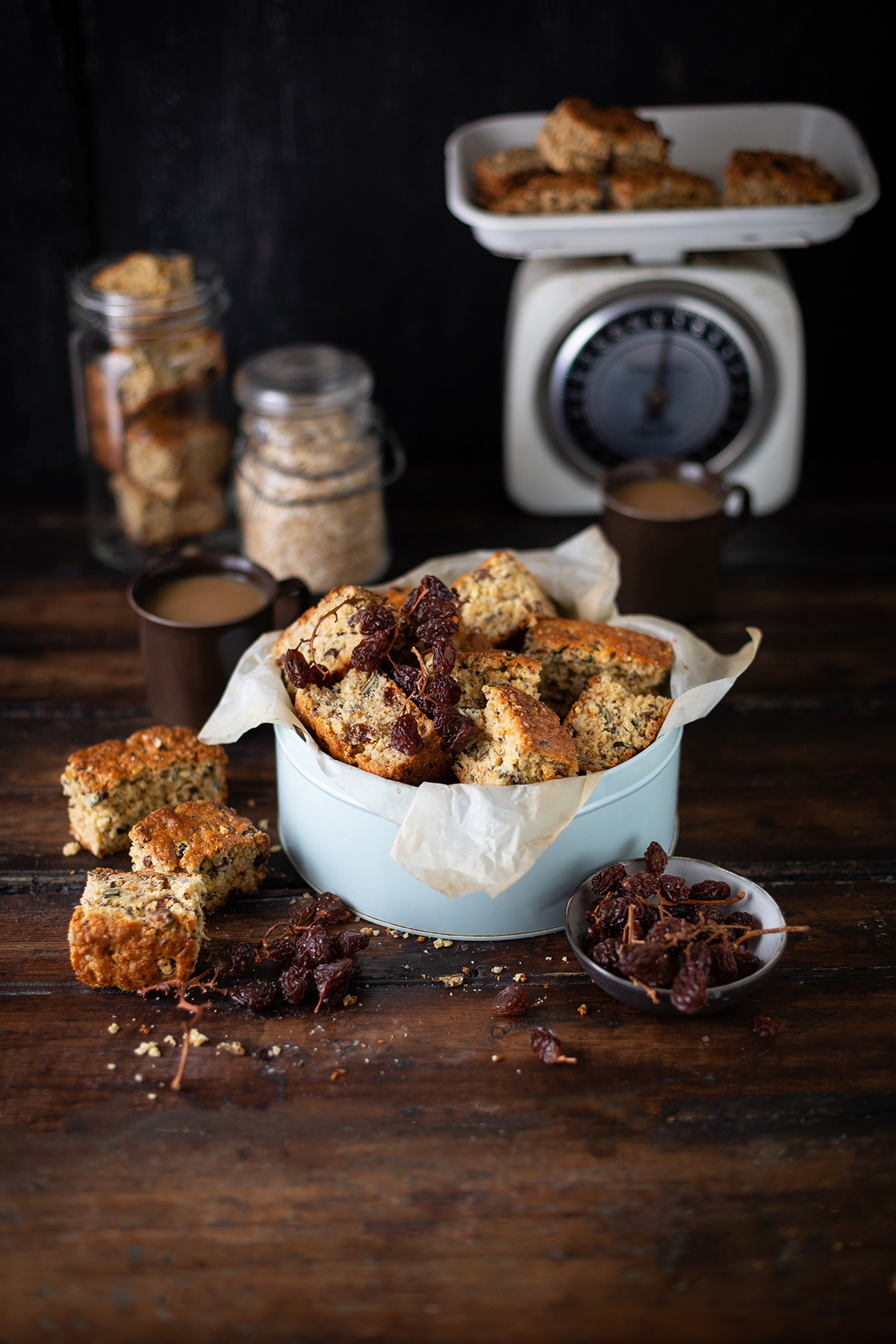
Rusks are twice-baked biscuits, originally made on South African farms as a way of preserving bread for long journeys. The dough bakes first as a loaf or tray, gets cut into thick fingers while still warm, and then dries out overnight in a very low oven until completely hard and shelf-stable. They’re not meant to be eaten dry. Instead, you dunk them into hot coffee or rooibos tea until they soften just enough to bite through. At that point, they’re one of the great breakfast experiences. Buttermilk rusks are the most traditional version. I also make muesli rusks with oats and raisins, bran rusks, and an air fryer version that cuts the drying time significantly.

What is Cape Malay food?
Cape Malay cuisine developed in Cape Town among the descendants of enslaved and indentured people brought from Southeast Asia, India, and East Africa by the Dutch East India Company from the late 1600s onwards. It draws on Javanese, Malaysian, Indian, and African influences, shaped by centuries of adaptation in the Cape. The flavours are warm and fragrant rather than hot. Cardamom, cinnamon, cloves, turmeric, dried fruit, and tamarind are frequently used. Bobotie, Cape Malay curry, denningvleis, koesisters, and yellow rice with raisins are among the most recognisable dishes. It’s some of the most distinctive and beautiful cooking to come out of South Africa.
What is boerewors?
Boerewors means “farmer’s sausage” in Afrikaans. It’s a coarsely ground beef and pork sausage seasoned with coriander, cloves, nutmeg, and vinegar, formed into a continuous coil. It’s the centrepiece of any braai and one of the most immediately recognisable South African foods. Good boerewors has a high meat-to-fat ratio and real texture from the coarse grind. It’s cooked over coals rather than a gas flame and splits if you prick it, so you don’t. Serve it in a bread roll with chakalaka or tomato and onion relish, or alongside pap and a braai salad.
What is peri-peri?
Peri-peri, also written piri-piri, refers both to a small, intensely hot chilli native to southern Africa and to the sauce made from it. The chilli was cultivated extensively in Mozambique during the Portuguese colonial period and became central to Mozambican and South African coastal cooking. Today it’s best known through the grilled chicken preparations that have made it famous globally. A proper peri-peri sauce blends dried or fresh chillies with garlic, lemon, and oil into something fiery and deeply flavoured. My homemade peri-peri sauce uses dried peri-peri chillies and roasted red pepper. It tastes nothing like the bottled version.

What is a koeksister?
A koeksister is a traditional Afrikaans confection. The dough is plaited or twisted, deep-fried until golden, and then dunked immediately into ice-cold sugar syrup. As it cools, it absorbs the syrup completely. The result is sticky, glossy, intensely sweet, and unlike anything else. The syrup is flavoured with ginger and cinnamon, and the contrast between the crisp exterior and the syrup-saturated interior is what makes it so distinctive. Worth noting: there is also a Cape Malay version called the koesister. It’s rounder, spiced differently, and rolled in coconut. The two share a name but are quite different in character.
South African Baking and Dessert Recipes
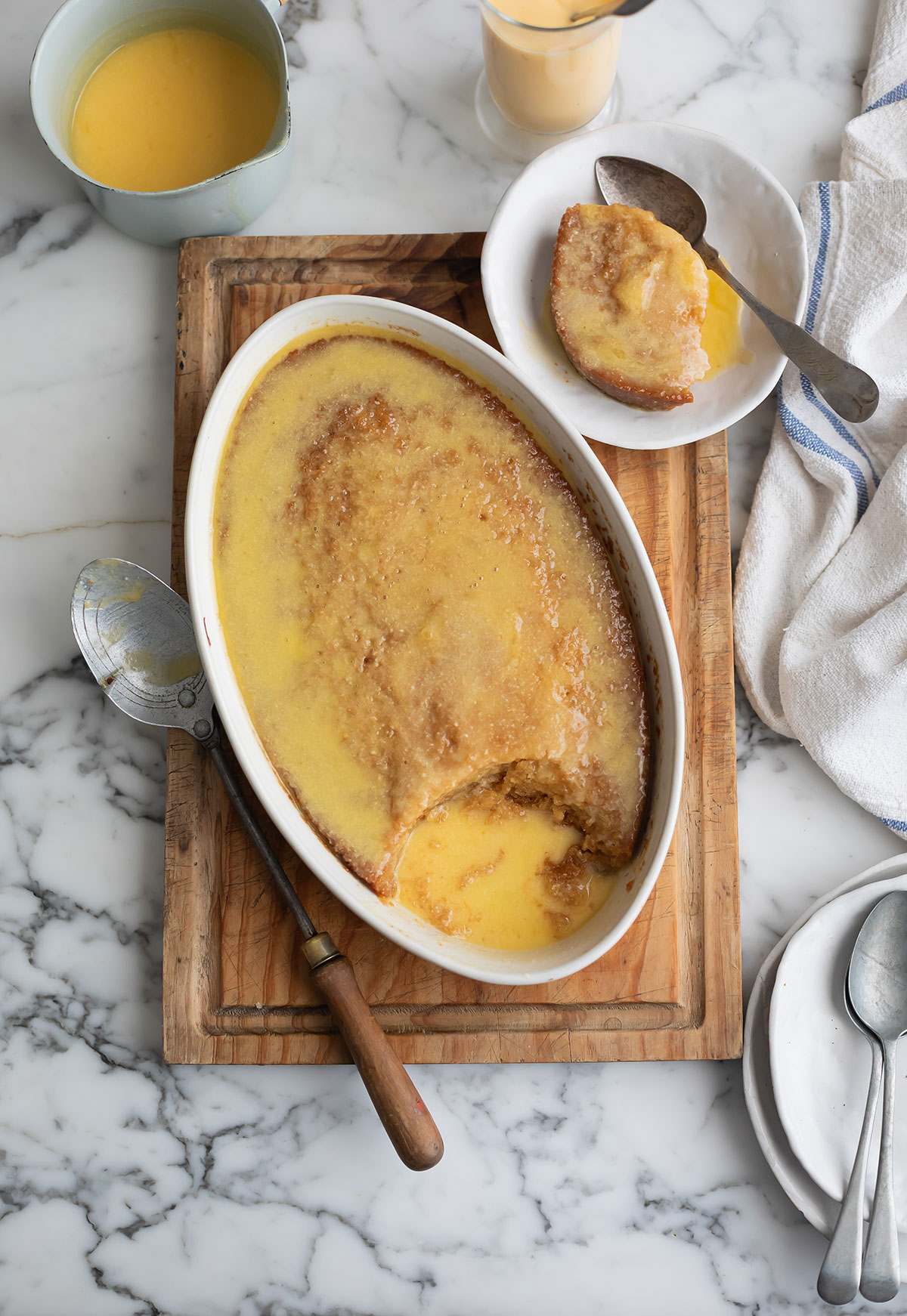
The best malva pudding with orange
This is the best malva pudding I know and adapted from Maggie Pepler. I have given the recipe a citrus twist, but you can choose to opt for the original.
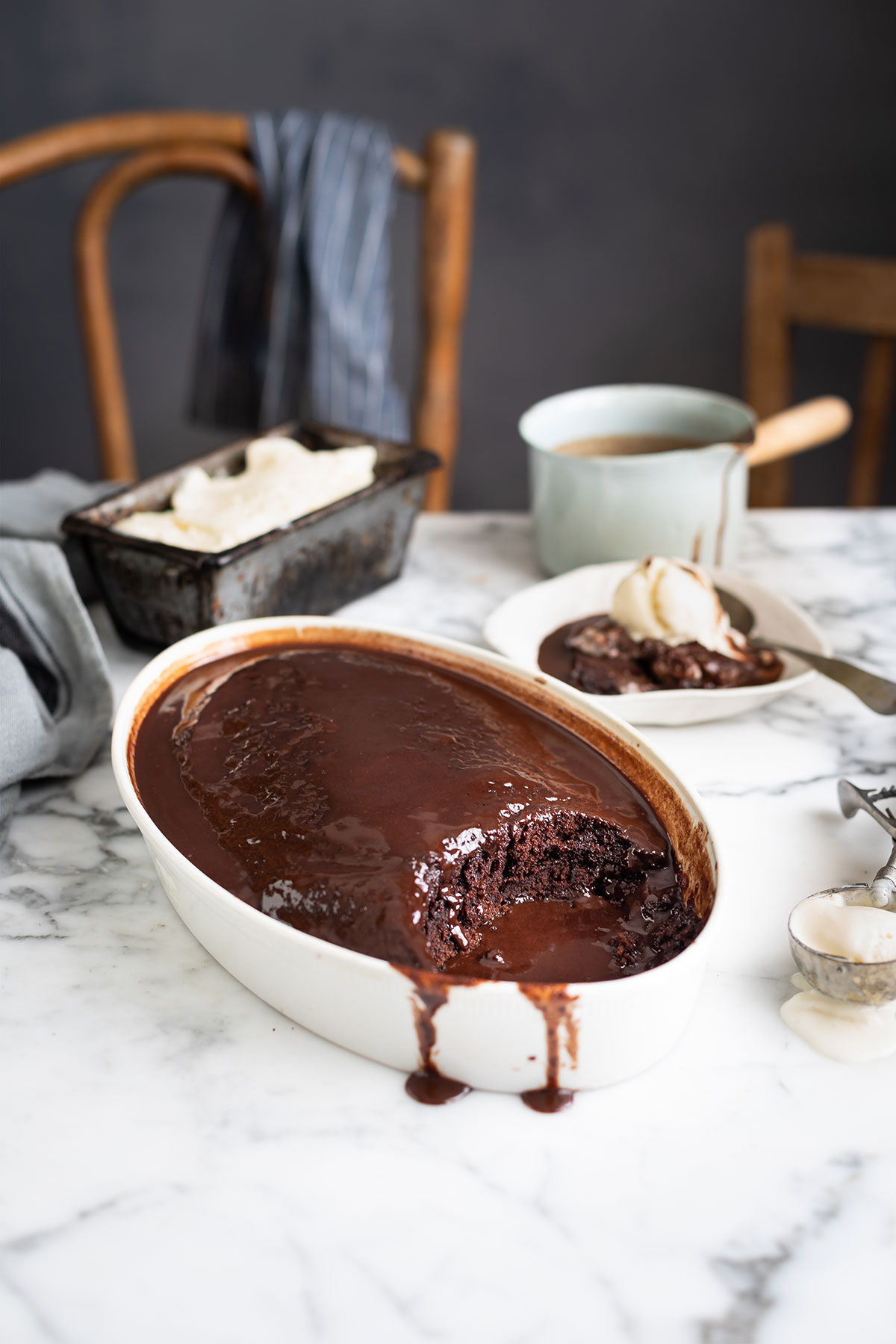
The Best Chocolate Malva Pudding
This is the chocolate version of a classic malva pudding, and it’s rich, saucy and very decadent. I love to serve it with a scoop of vanilla ice cream. I added a hint of orange to the original malva pudding recipe, which hails from Boschendal and is widely regarded as the best.
My grandmother Betty’s traditional crunchies
These are the best crunchies I know and one of my most popular recipes on Drizzle & Dip.

The best classic South African unbaked milk tart
This is my favourite milk tart recipe. It is unbaked and uses Tennis biscuits as a base.
No-Bake Cremora Tart Squares With Granadilla
A nostalgic dessert similar to a no-bake cheesecake. Top with whatever fresh fruit you like.

Classic South African koeksisters
I love these delicious koeksisters from the late Michael Olivier. Spiced with warming aromatics of ginger and cinnamon and a hint of citrus. These are my ultimate koeksisters.

Classic fudge with vanilla and Chuckles
Fudge is so nostalgic for me growing up in South Africa, even though it originated in England. This is my favourite buttery fudge, to which I added Chuckles (optional), also known as Maltesers or chocolate malted puffs.

I twist on a classic malva pudding with pears and ginger. I originally developed this recipe for Ina Paarmen using her malva pudding premix back in 2020.

Malva pudding with cranberries & ginger
Another variation of a classic malva pudding with cranberries and ginger.
This is another nostalgic dessert from my childhood, and I love to make it with Tennis biscuits.

Rooibos tea meringues with rooibos and white chocolate ganache
I add Rooibos tea to meringues to give them a distictive flavour.
Buttermilk rusks – a classic recipe
I have tweaked this recipe over the years to get it perfect and to taste like Ouma Rusks used to. I also made an Air Fryer version, which is a smaller batch and fits into a large Air Fryer.

The Best Buttermilk Bran Rusks
This is my favourite rusk recipe of all time.
Buttermilk Bran Rusks With Raisins And Seeds
Muesli rusks with oats & raisins
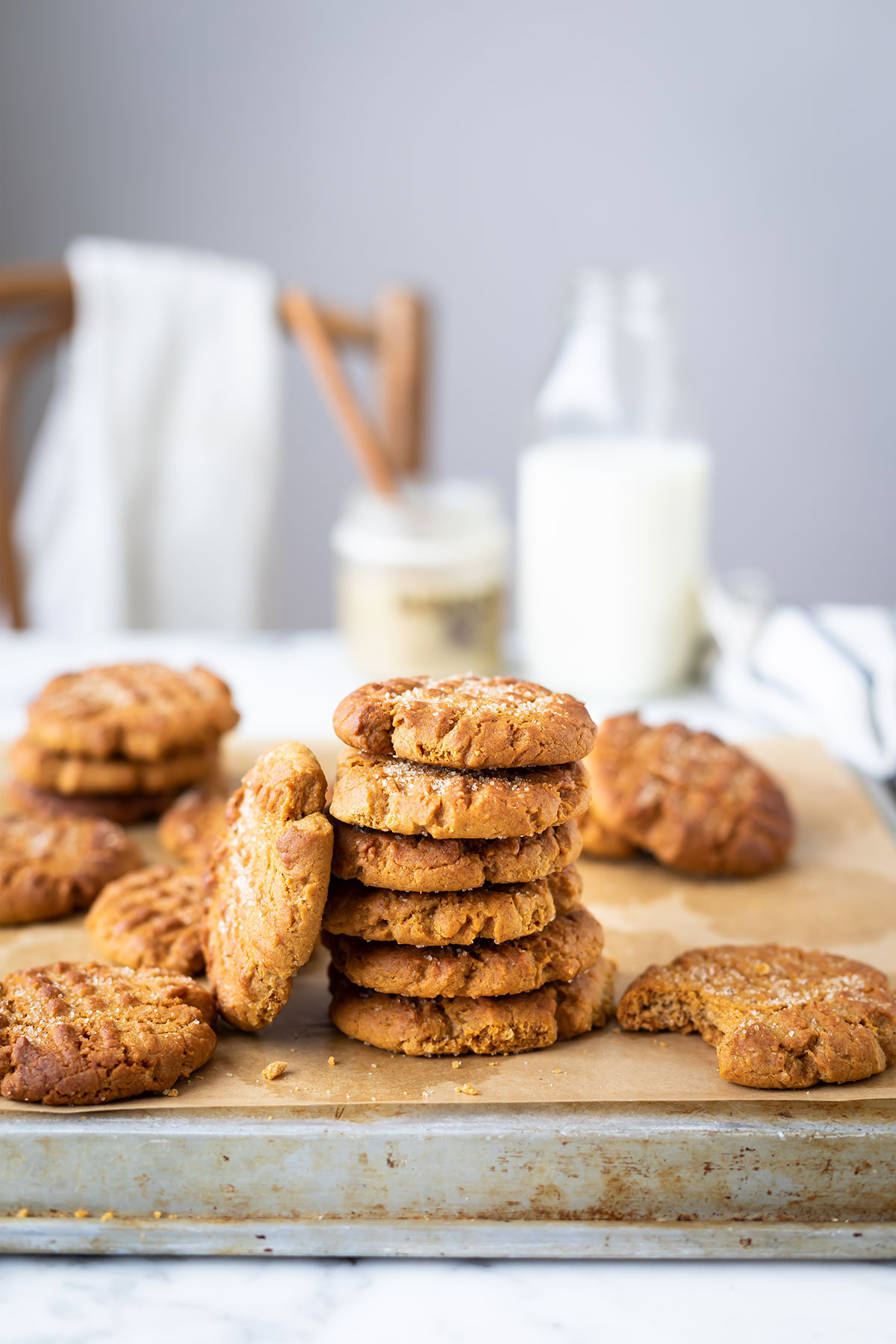
Easy honeyed ginger biscuits (cookies)
Best Healthier Seeded Crunchies
I added seeds to the classic crunchie recipes.

Dates make these crunchies a little chewier, but it’s a nice variation.
Granadilla/passion fruit sorbet
Reminiscent of a favourite ice cream lolly sold on Cape Town beaches during summer, this recipe captures that taste.

Rooibos tea and honey ice cream
I have added a boozy hit and tempered the sweetness with a little coffee.
Pancakes filled with Caramel Treat and bananas
For me, pannekoek means a church fete or school bazaar, lacy-edged pancakes dusted with cinnamon sugar, eaten standing up from a paper plate. This recipe, from the late Peter Veldsman, is the one that takes me straight back there. If you know, you know. If you don’t, you’re about to.

South African Bread Recipes
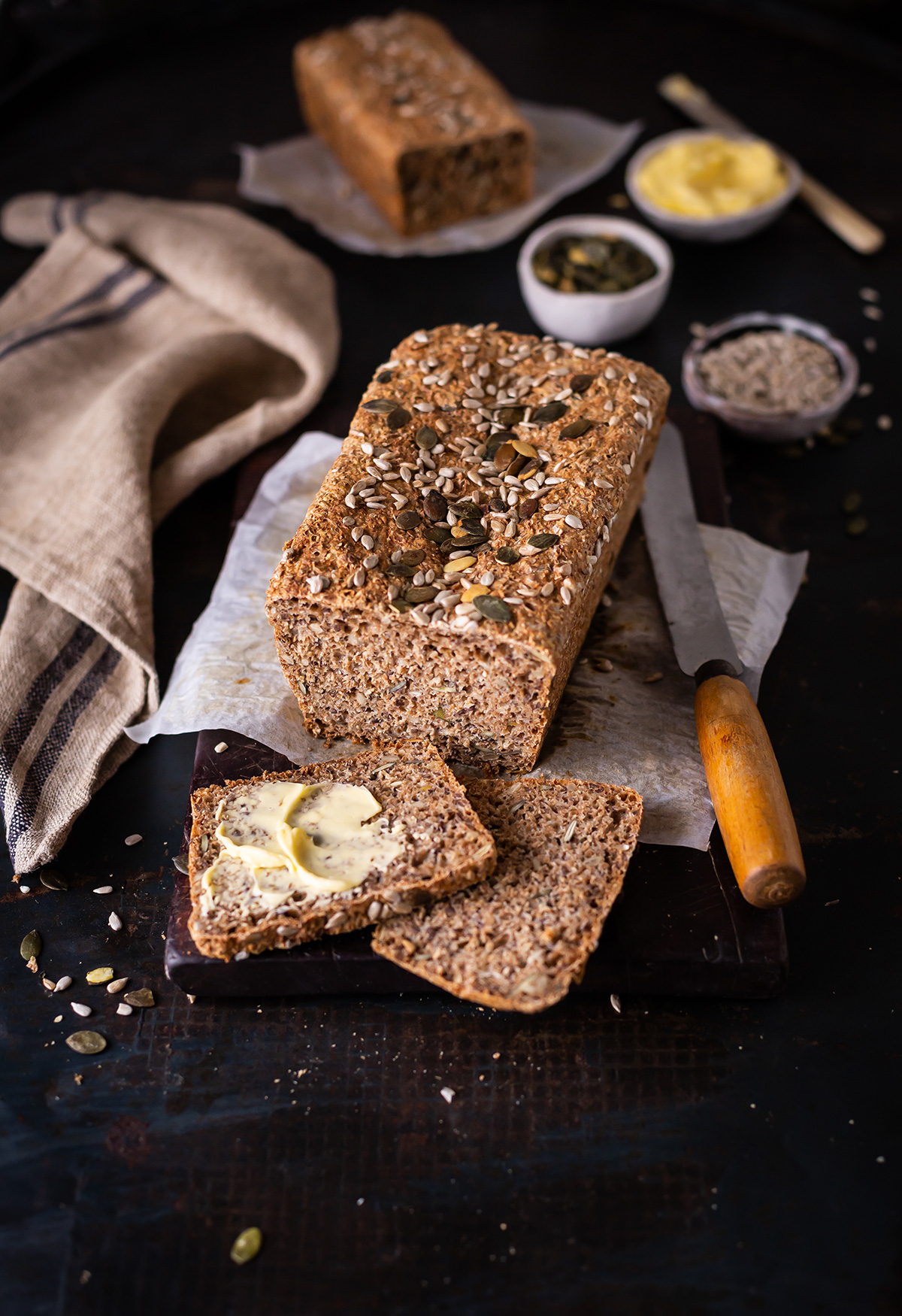
A classic Cape seed loaf wholewheat bread
The Best Easy Cheese & Sweetcorn Bread
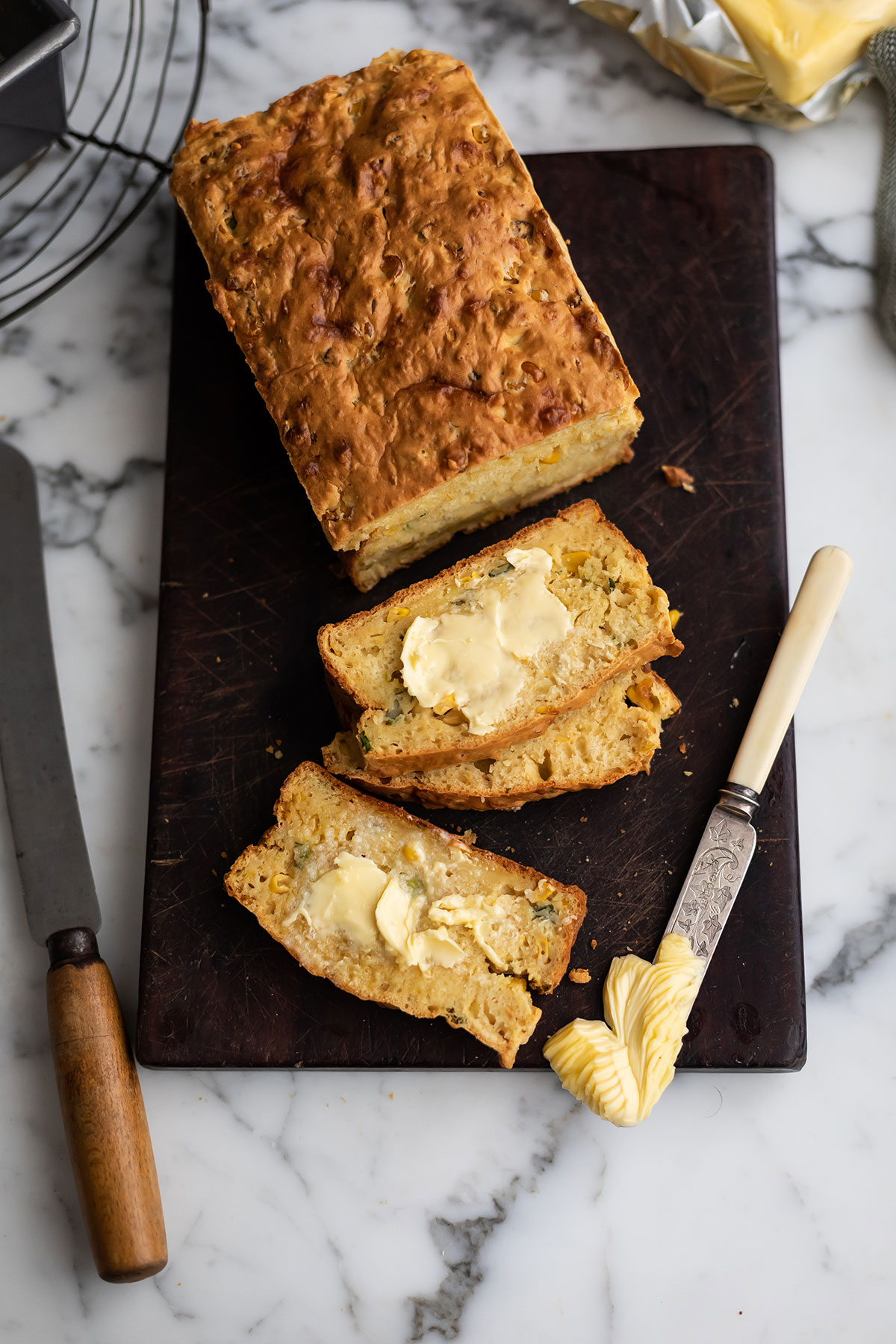
Easy cheese & onion bread with red pepper pesto
Easy sprite scones with cheese and herbs
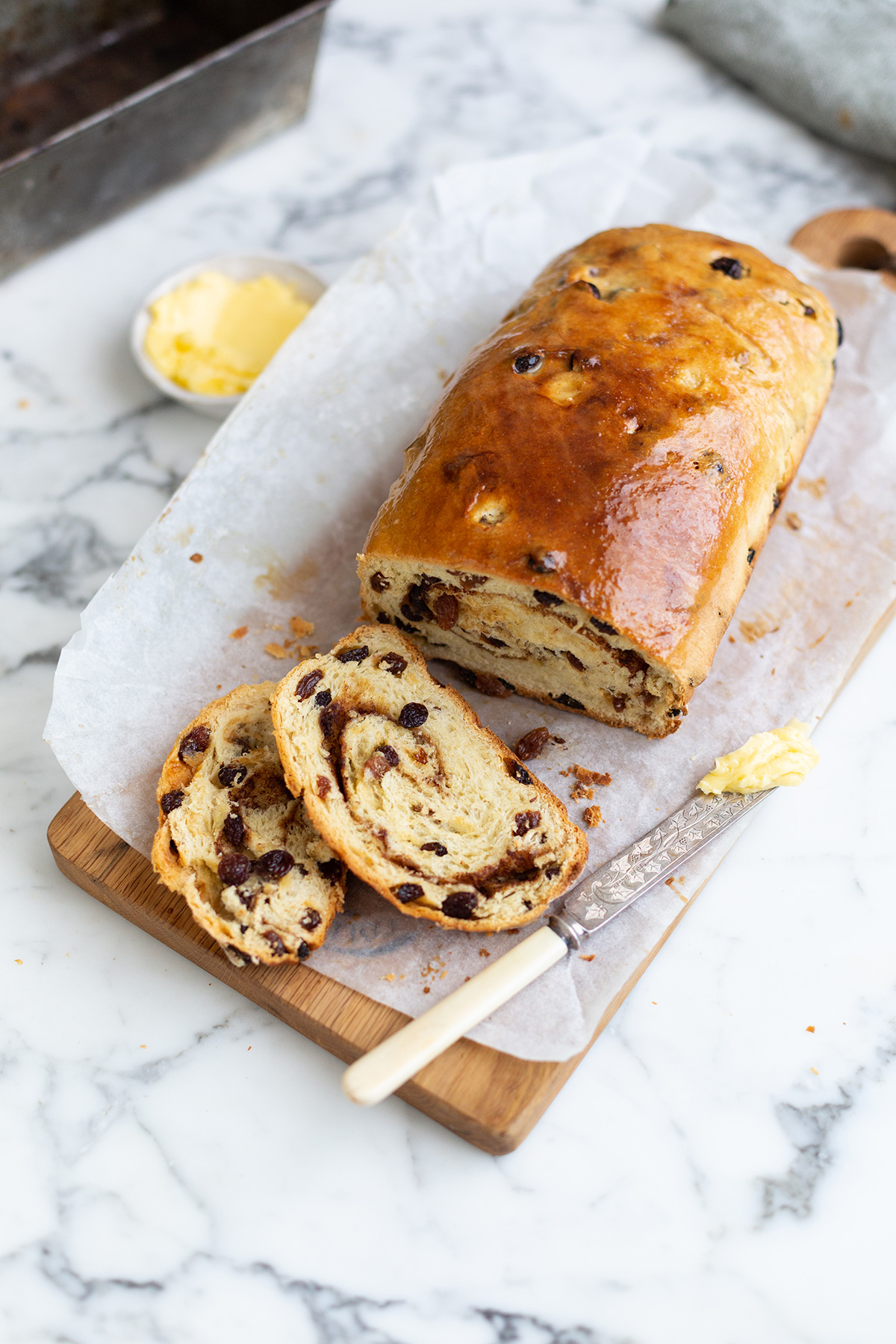
South African Meat Dishes
Slow Braised Oxtail In Red Wine (Oven & Pressure Cooker)

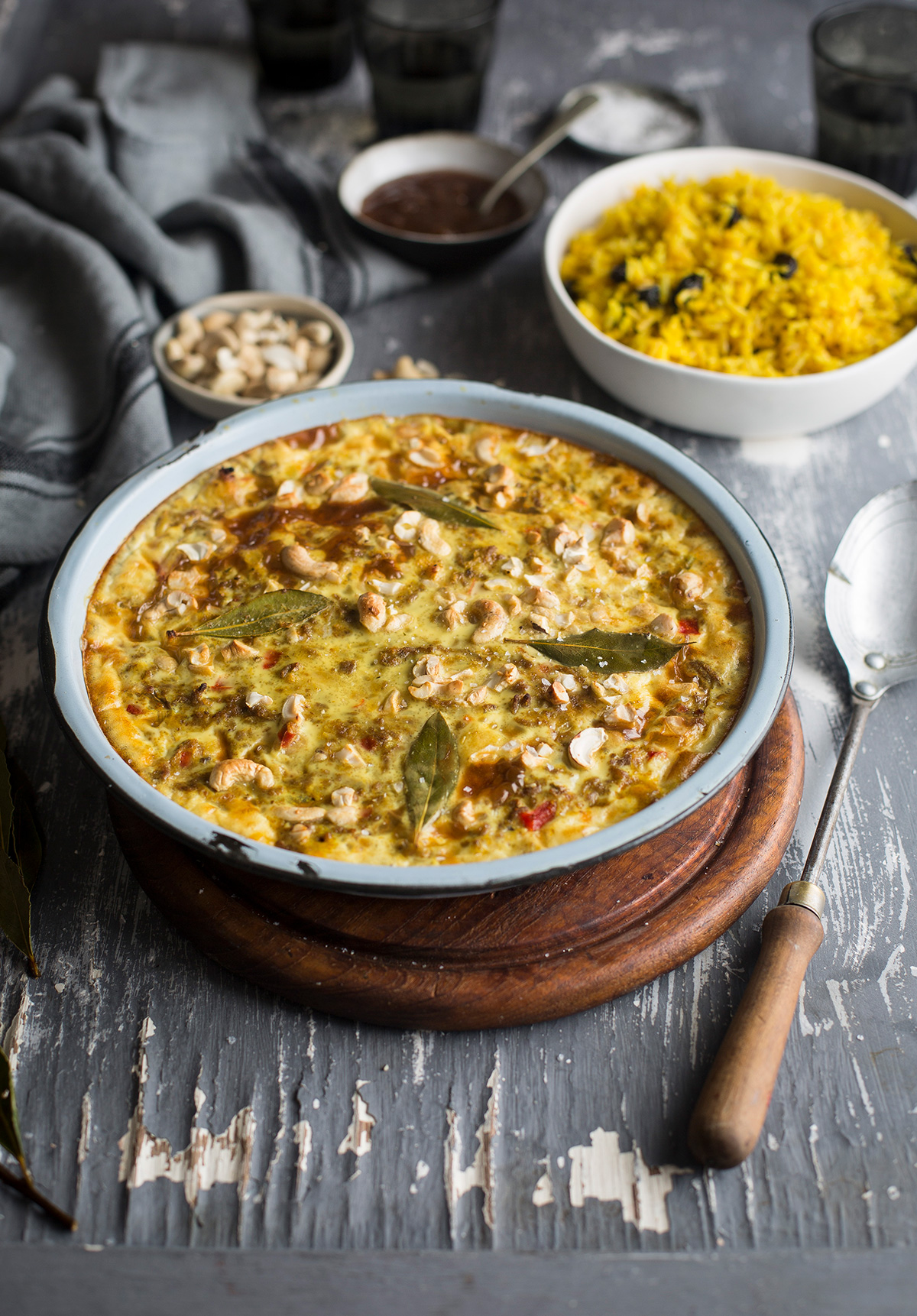
Classic Cape Tomato Bredie Recipe (Instant Pot And Stovetop)

Boerewors burger with avocado, bacon & peppadew

A Classic South African Lamb Waterblommetjie Potjie
Lamb waterblommetjie bredie is an iconic South African dish from the Western Cape, and cooking it in a potjie (cast iron pot) low and slow over the coals takes it to the next ‘local is lekker’ level. You can just as easily do this on the stovetop, and I give both instructions in my recipe. A flat-bottomed potjie pot is essentially a Dutch oven.

Other South African dishes
With this recipe for waterblommetjie tempura, I run blanched indigenous Cape waterblommetjies through a tempura batter before frying them to crispy perfection. Served with a chilli dipping sauce, they make a perfect snack or starter.
This is a nostalgic recipe from my childhood, and one my mom used to make. Since she is sadly no longer alive, I made it from memory. I make it with either smoked snoek or leftover braaied snoek, and both work equally well.

South African Braai Recipes
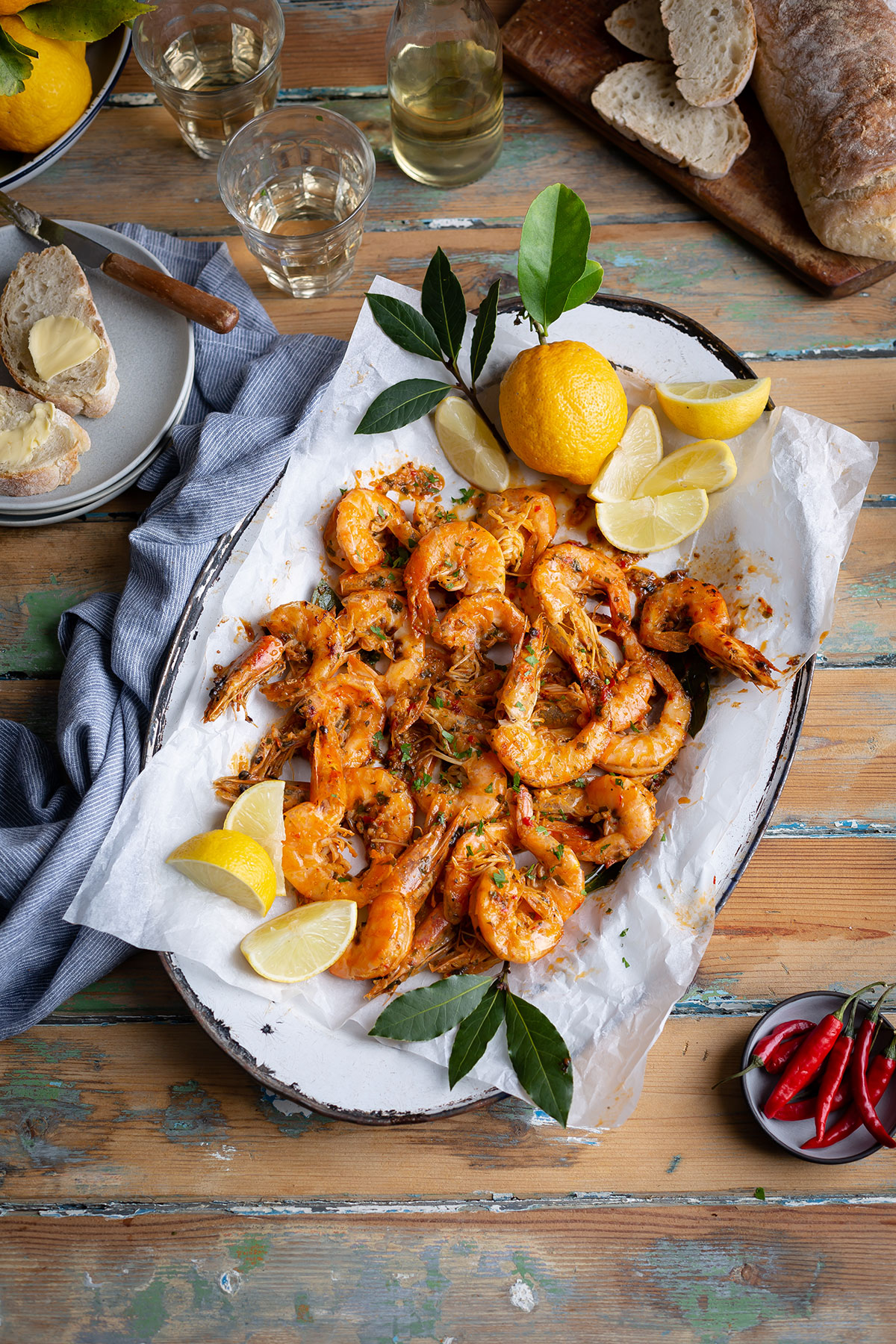
Braaied snoek with orange and apricot butter


Appetisers, Condiments and Sides


The best ever garlic bread with coriander and parmesan
Traditional South African Yellow Rice With Raisins
Turn any leftover bobotie into these delicious and crisp phyllo pies.

The soup version of a classic tomato bredie.
Here is a delicious drink with South African flavours: spicy honey and rooibos granita gin and tonic

Further Reading: South African Food and Culture
South African food writing spans a remarkable range of voices, traditions, and perspectives. These are some of the writers and cooks who have shaped how this country’s food culture has been documented, celebrated, and understood. There are many others, and too many to mention here. In no particular order.
C. Louis Leipoldt (1880-1947) is arguably the earliest significant food writer in South African history and one of the most fascinating. Better known as an Afrikaans poet, Leipoldt regularly wrote about food and culinary traditions in South Africa and used his knowledge of local cuisine to challenge notions of “authentic Afrikaner dishes,” insisting instead that the earliest authorities behind original South African dishes came from the Cape Malay population of the Western Cape. His food writing, published posthumously in books including Leipoldt’s Cape Cookery and Polfyntjies vir die Proe, remains a foundational text for anyone serious about understanding where Cape cooking actually comes from.
Michael Olivier (1946 – 2023) was one of my earliest mentors in food media and a genuine encyclopedia of knowledge. Whenever I had a question about a recipe, an ingredient, or South African food history, he always had the answer. I miss him enormously. He left a gaping hole in the South African food landscape when he died in December 2023. A restaurateur, broadcaster, cookbook author, and prolific food and wine writer, Michael spent decades championing South African cuisine, wine, and hospitality with warmth and generosity that was entirely his own. From running acclaimed Cape restaurants, including Parks, to his influential years at Boschendal and his tireless work as a writer and mentor, he became one of the industry’s most loved figures. He was awarded the Eat Out Lannice Snyman Lifetime Achievement Award in 2013, a recognition that felt long overdue even then.
Faldela Williams (1952 – 2014) holds a significant place in the history of Cape Malay food writing. It was only in 1988 that Faldela Williams, now deceased, became the first Cape Muslim cook to contribute to the mainstream narrative with The Cape Malay Cookbook. Previously, all published writers had been white and the recipes narrowly catered to their tastes. Her book was a turning point in who got to tell the story of Cape cooking.
Cass Abrahams (1944 0 2026) built on that foundation and pushed it further. Historian and chef Cass Abrahams would go on to challenge the status quo by declaring Cape Malay cuisine “food from Africa” in her 1995 cookbook, The Culture and Cuisine of the Cape Malays. That framing mattered. Abrahams’ work positioned Cape Malay food not as a foreign import or a colonial curiosity but as something that belongs to this continent.
Peter Veldsman (1941-2024) was the doyen of Afrikaans food writing for several decades and one of the most influential figures in South African food media. He wore many hats: a teacher, cookbook author, restaurateur, award-winning food writer, and tireless advocate for the culinary world. He established the first Cordon Bleu School in South Africa, served as chairperson of the Chaîne des Rôtisseurs and the Culinary Circle of South Africa, and served as food editor at SARIE magazine for nearly two decades. He later ran Emily’s restaurant at the V&A Waterfront for over two decades. His cookbook Flavours of South Africa traces the country’s food history through the 20th century and remains an important reference. He passed away in April 2024 at the age of 82.
Fatima Sydow (1973-2023) was the most visible ambassador for Cape Malay cooking of her generation. She built a following of hundreds of thousands through her Facebook page and television series before her cookbooks brought her work to a wider audience. She declared: “Cape Malay is not a geography; it’s a lifestyle, and it’s tied to your roots.” She wrote several books, including Cape, Curry and Koesisters with her twin sister Gadija Sydow Nordien. She passed away in December 2023 after a long illness, aged 50, and her loss was felt across South African food culture.
Lannice Snyman (1948-2010) was one of the most influential figures in South African food culture and a person whose legacy shaped the entire landscape of how this country’s cooking was documented and discussed. She wrote 15 cookbooks, of which over 500,000 copies were sold. Her book Rainbow Cuisine: A Culinary Journey Through South Africa remains one of the most thorough and beautifully produced overviews of the country’s diverse food traditions, covering Cape Malay, Cape Dutch, Afrikaans, British, Indian, and Indigenous cooking across the country’s regions. She was the founding editor of the Eat Out Restaurant Guide and edited it for 18 years. She served as the Southern African regional chairman of the World’s 50 Best Restaurants. Her first book, Free from the Sea, co-authored with Anne Klarie in 1979, documented West Coast fishing traditions and seafood cooking in a way that had never been done before. She later established Lannice Snyman Publishers with her daughters, through which she continued to produce and reprint her catalogue independently. She passed away in 2010. Her daughter, Tamsin Snyman, continues her publishing and culinary consulting work from Cape Town.
Dorah Sitole (1953 – 1921) was one of South Africa’s most important culinary voices and a pioneering food writer who played a significant role in documenting and celebrating African food culture. An award-winning cookbook author, journalist, and former editor of True Love magazine, she spent decades preserving indigenous recipes and food traditions while bringing African cuisine into the mainstream. Through books such as 40 Years of Iconic Food and her work across media, she became a powerful advocate for recognising and celebrating African culinary heritage. She sadly died on 3 January 2021 at the age of 67. I am pleased I got to meet her, and she was incredibly encouraging about my work.
Ina Paarman is one of the most recognisable names in South African food, and has been for decades. A home economics teacher turned cookery teacher and prolific cookbook author, she built a reputation for practical, reliable recipes that spoke directly to the South African home cook. Over time, she and her son expanded that work into a thriving food brand, Ina Paarman’s Kitchen, producing spice blends, sauces, salad dressings, and cooking aids that have become staples in South African kitchens. Her products follow the same philosophy as her books: making good cooking more accessible without cutting corners on flavour. For many South Africans, her cookbooks were the first serious food books in the house, and her spice blends are still the ones people reach for without thinking about it.
Jan Hendrik van der Westhuizen has done more than almost any other South African to put this country’s food culture on the global stage. Raised on a farm in Mpumalanga, he trained in culinary arts in Stellenbosch before opening Restaurant JAN in Nice, France, in 2013, a 24-seat restaurant that became one of the most talked-about tables on the French Riviera and earned a Michelin star in 2016, which it has held for 11 consecutive years. What makes his work significant for South African food is what he puts on the plate to earn it: rooibos, buchu, mosbolletjies, and rusks appear alongside the finest French market produce, making the case that South African ingredients belong at the highest table. Today, he runs Le Bistrot de JAN in Nice alongside a Cape Town outpost of the same and a seasonal restaurant at La Motte wine estate in Franschhoek. He has published two cookbooks and many Journals, produced several television series, and in 2023 was named first on the African Food Network’s list of the 100 Most Influential People in the African Food Industry.
Barbara Joubert is a South African food writer, cookbook author and former editor of Sarie Kos. She served as food editor at Sarie from 2004 to 2016, where she played a central role in shaping the magazine’s food content and recipes. Her first cookbook, Sarie 5, based on the idea of cooking with just five ingredients, was an immediate success, selling its first print run of 15,000 copies within two weeks, followed by a second print run of 10,000 that also sold out. She later authored Proe die Lekker and Kostalgie, books that reflect her warm, accessible approach to home cooking and her love of South African food traditions.
Herman Lensing is one of South Africa’s most prominent food personalities today and the current editor of Sarie Kos, a position he has held since 2017. He grew up in Upington in the Northern Cape and qualified as a chef at the Institute of Culinary Arts in Stellenbosch before joining Sarie’s editorial team in 2009 at just 22 years old. He has since built one of the most substantial careers in South African food media, working across publishing, television, and culinary consultancy simultaneously. He is the author of multiple bestselling cookbooks, among them Dit Proe Soos Huis, which became the top-selling Afrikaans cookbook of 2019 and was a finalist in the SA Book Awards, and Home Cooking, which won a Gourmand Cookbook Award in the world celebrity chef category in 2023. On television, he is well known for series including Inspirasiekos met Sarie, Dit Proe Soos Huis, Herman se Kortpaaie, and Herman se Mikro-Geheime on DStv’s VIA channel, and he has worked as a food producer behind the scenes on MasterChef South Africa and kykNET’s Kokkedoor Vuur and Vlam. He has won the Galliova Award for South Africa’s top food writer several times. His cooking is rooted in a deep affection for South African ingredients and home cooking traditions, and his reach across both Afrikaans and broader South African food culture makes him one of the most connected figures in the industry.
Woolworths Taste at taste.co.za is the most comprehensive archive of South African recipes available online, and the publication I often use as a reference. Originally published as primarily a print magazine, Taste transitioned to a digital-first platform in 2024 after 21 years in print and has since grown its audience to over 20 million monthly readers. The print magazine is now published quarterly. What makes it useful is the breadth and cultural range of its recipe archive, built deliberately around contributors from the communities whose food they are documenting. It covers Cape Malay cooking, Zulu traditions, Indian South African food, Afrikaans baking, and the full range of what South Africans actually eat at home.
Abigail Donnelly has been Food Director of Woolworths Taste since 2007, making her one of the longest-serving and most influential editorial voices in South African food media. In nearly two decades at the publication, she has created, tested, and styled over 2,000 recipes and has shaped Taste’s direction as it evolved from a print magazine into the digital-first platform it is today. Her food sensibility sits at the intersection of accessible and aspirational: recipes that are genuinely achievable for a home cook but never dull, and editorial thinking that takes South African ingredients and cooking traditions seriously while remaining open to international influence. Under her stewardship, Taste built a trusted reputation for consistently good food and reliable recipes published over a very long period. For anyone cooking South African food and wanting a reference they can trust, her work at Taste is the obvious place to look.
Khanya Mzongwana, Taste Magazine’s food editor, hails from the Eastern Cape and is one of the most interesting voices in South African food writing today. Celebrated for her emotive storytelling, her visual craftsmanship, and her ability to connect food with lived experience, she brings a distinctly personal and culturally rooted perspective to her work. She won the 2022 Food XX Award for food styling, and her cooking reflects a deep connection to the food she grew up eating.
Jan Braai, whose real name is Jan Scannell, has done more than anyone else to formalise, celebrate, and elevate the South African braai into a recognised cultural institution. Born and raised in Stellenbosch, he left a career as a chartered accountant to found National Braai Day in 2005. The idea was simple yet powerful: that cooking over fire is a shared ritual that unites South Africans across race, language, and background. Held annually on 24 September, the day now attracts an estimated 15 to 20 million participants, and counts the late Archbishop Emeritus Desmond Tutu as its patron. He is the author of ten bestselling braai cookbooks in both English and Afrikaans, including Fireworks, Red Hot, The Democratic Republic of Braai, and the acclaimed Atmosfire. Several of his titles have been published internationally, and three have received Gourmand Cookbook Awards. His television series Jan Braai vir Erfenis on DStv’s kykNET is now in its 16th season, taking viewers on a journey across South Africa and beyond in search of great braai traditions. Nobody has done more to put braai on the map, locally and internationally, or argued more convincingly that this most South African of traditions deserves to be both celebrated and taken seriously.
Ishay Govender, born in Durban, is a food and travel journalist who seeks the intersection between food, culture, justice, and representation. She authored the cookbook Curry: Stories and Recipes Across South Africa, and founded SA POC at the Table, a group that fosters opportunities for skills exchange, networking, and collaboration for people of colour in the food and beverage industry. Her writing appears in Al Jazeera, National Geographic, Saveur, and Food and Wine. If you want to understand the full breadth of South African food culture and the politics that shape it, her work is essential reading.
Ilse van der Merwe is a recipe developer, food writer, and the creator of the well-established food blog The Food Fox. Her work as a recipe developer is with a genuine love for South African ingredients and cooking traditions. In 2025, she published Timeless South African: A Celebration of 101 Iconic South African Dishes, a beautiful coffee table book that moves across the full range of the country’s best-known food. It covers the dishes that South Africans grew up eating, the recipes that appear at celebrations and family tables, and the food that most of us associate with home. If you are new to South African cooking and want a single book that gives you a broad, well-photographed overview of the canon, this is a very good place to start.
Zola Nene is a chef, television presenter, and cookbook author whose work brings accessible, joyful South African cooking to a broad audience. Her cookbook Simply 7 Colours, which takes its name from the traditional South African plate of seven colours served at Sunday lunch, won the 2023 Gourmand Food and Media Celebrity award for English-speaking countries. She is one of the most recognisable faces in contemporary South African food media.
Dine van Zyl is one of the most dedicated chroniclers of Afrikaans food traditions in South Africa. An award-winning author and television personality, she has spent decades travelling the country collecting recipes, stories, and the histories behind the food that Afrikaans-speaking South Africans grew up eating. Her book Boerekos, first published in 1985, became a foundational text for anyone wanting to understand traditional farm cooking: tarentaalsop, skaapboud, bobotie, sosaties, koeksisters, and the kind of desserts that appear at every farm table. Her philosophy is that a recipe does not exist in isolation. It has a history, a route, a reason for being at the southern tip of Africa. Her popular KykNet television series Boerekos met Dine van Zyl brought that thinking to a new generation of home cooks, and her Great Boerekos books, which she researched, wrote, and published herself, won a Gourmand Cookbook Award for Best South African cookbook. Her work is a genuine archive of a food tradition that deserves to be documented properly.
Tony Jackman is the food editor of Daily Maverick and the writer of its widely-read food column TGIFood. A journalist since 1976 and a playwright with a long career behind him, he lived in the Karoo for 12 years, researching and cooking traditional dishes from one of South Africa’s most distinctive and underwritten food landscapes. His new book Retro Karoo Food, published in March 2026, brings together 80 recipes from his Karoo kitchen: some traditional, some adapted, some his own. Skilpadjies, tomato bredie, waterblommetjiebredie, hoenderpastei, and prickly pear syrup sit alongside his own inventions and his careful tracking down of dishes from C. Louis Leipoldt and other early food writers. There are no trends in the book, which is exactly the point. It is a throwback to the genuine article, and for anyone wanting to understand the food of the interior, it is an important resource. In 2021, he was named Galliova Food Champion for his food writing.
Hetta van Deventer-Terblanche is a Cordon Bleu-trained culinary consultant and the driving force behind one of the most serious attempts to document and define Cape Winelands cuisine as a distinct food tradition. Working as a culinary manager at La Motte wine estate in Franschhoek, she spent years researching the food history of the Cape Winelands region, tracing recipes back through the Dutch, German, French Huguenot, Flemish, and Cape Malay influences that shaped cooking in this part of South Africa over three centuries. That research formed the foundation of her cookbook Cape Winelands Cuisine, published by Human and Rousseau, which covers the eating habits of the Cape over 300 years and revives dishes that were in genuine danger of being lost. Wentelteefjes, kandeel, waterblommetjie soup, bobotie frikkadelle, and Cape brandy tart sit alongside more contemporary preparations rooted in the same culinary history.
Kobus van der Merwe is the chef and owner of Wolfgat, a 20-seat restaurant in a 130-year-old whitewashed fisherman’s cottage overlooking the bay in Paternoster on the West Coast. In 2019, Wolfgat was named Best Off-Map Destination at the inaugural World Restaurant Awards, a result that brought significant international attention to West Coast South African cooking and to Paternoster as a food destination. The achievement was meaningful not just for Kobus but for what it said about South African food and its capacity to be taken seriously on a global stage. His cooking is built around what he calls Strandveld cuisine, a hyperlocal, forager-led approach rooted in the Strandveld Fynbos of the West Coast. He walks the shoreline and veld daily, gathering indigenous succulents, wild herbs, seaweed, and coastal plants that most South Africans have never considered edible. The result is a seven-course tasting menu that changes constantly with the season and the weather, and that tastes genuinely unlike anything served anywhere else. His cookbook Strandveld Food documents the ingredients and philosophy behind this cooking and is the closest thing we have to a written record of a food tradition that is both ancient and entirely new. For anyone interested in understanding what the West Coast landscape actually tastes like, Wolfgat and Kobus van der Merwe are the starting point.
South African baking books I love and use as a reference:
The Snowflake Book of Baking and Home Bakes by Carolie de Koster are two out-of-print baking reference books that I return to regularly when researching South African baking. Both are the kind of books that serious South African bakers quietly pass between each other, hunt for in second-hand bookshops, and refuse to lend out. The Snowflake Book of Baking, produced in association with Snowflake, South Africa’s best-known flour brand, is an encyclopedic collection of South African bakes: rusks, crunchies, traditional tarts, cakes, muffins, breads, and savoury bakes, all built around the pantry staples that South African home cooks have always used. It covers basic techniques in the kind of detail that most modern baking books skip over, which is precisely what makes it so useful as a reference. Home Bakes, published by Lannice Snyman Publishers in 2001, takes a similar approach, emphasising reliable everyday baking rather than showstopper recipes. Both books are products of a South African food publishing tradition that prioritised practicality and accuracy over aesthetics, and that legacy is why they remain so useful decades after publication. If you find either in a second-hand bookshop, buy it immediately.
BUY MY eBOOK COMFORT
Find me on Instagram & Pinterest
Cooking Conversion Chart & Calculator
