

The Best Victoria Sponge Cake with Strawberry Jam Recipe
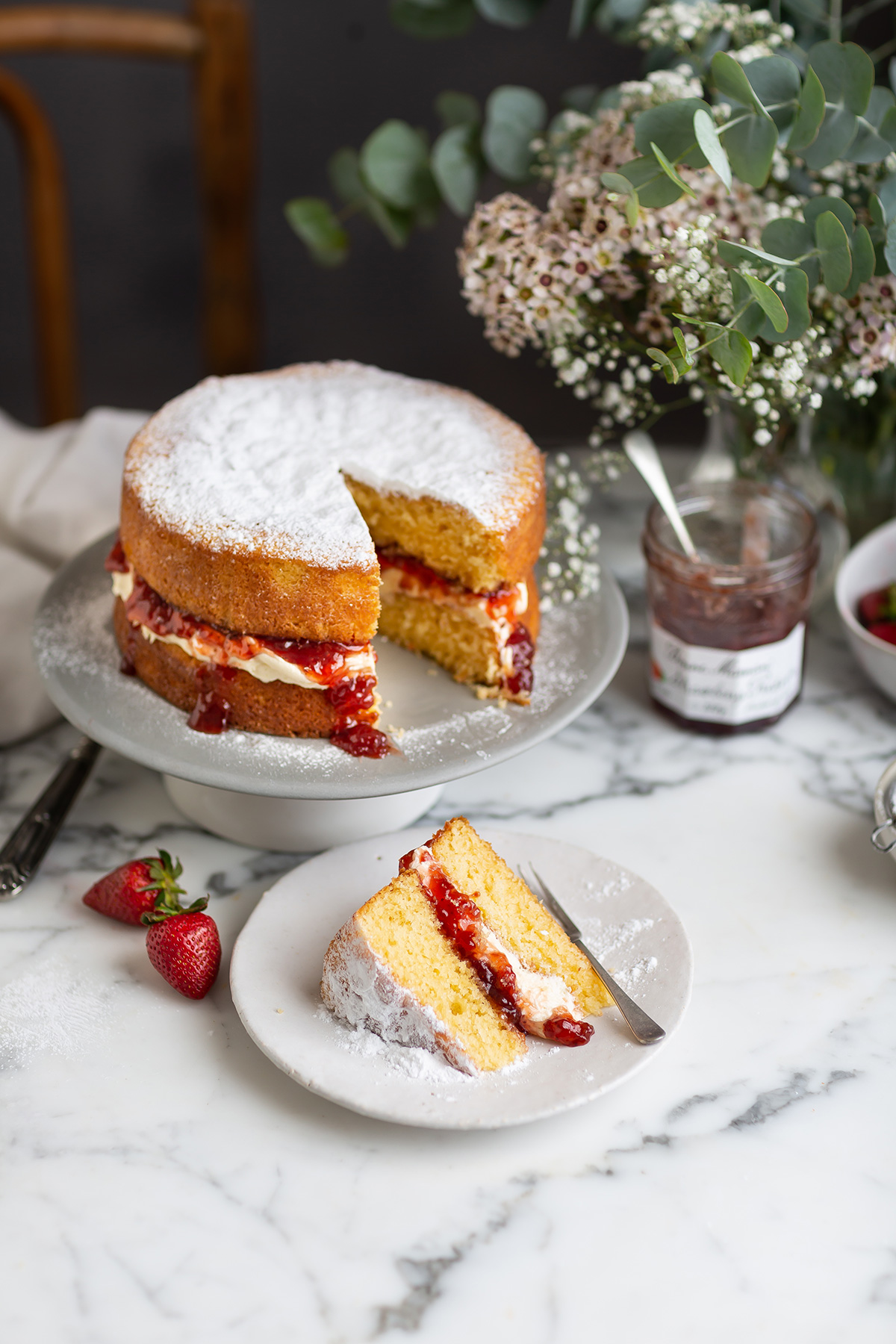
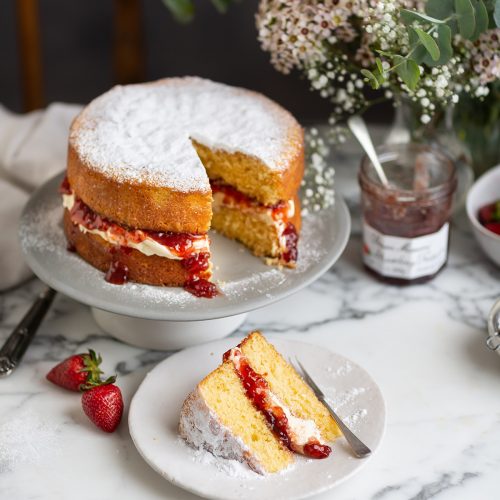
A good Victoria sponge cake is one of those bakes that looks deceptively simple but quietly rewards proper technique. I tested this recipe three times before I was happy with it, and what I discovered is that a few small details make a very big difference. Get those right, and you’ll end up with a beautiful cake: dense, moist crumb, a thick layer of berry jam, and a generous cloud of vanilla buttercream. It’s the kind of cake that never goes out of fashion.

Strawberry is the classic filling choice and the one I use here. I love a good-quality strawberry preserve for this, and Bonne Maman is what I reach for, as the fruit flavour is rounded and not too sweet, which balances well against the buttercream. Use any flavour you enjoy, though. Fresh cream in place of buttercream is equally lovely if you prefer.
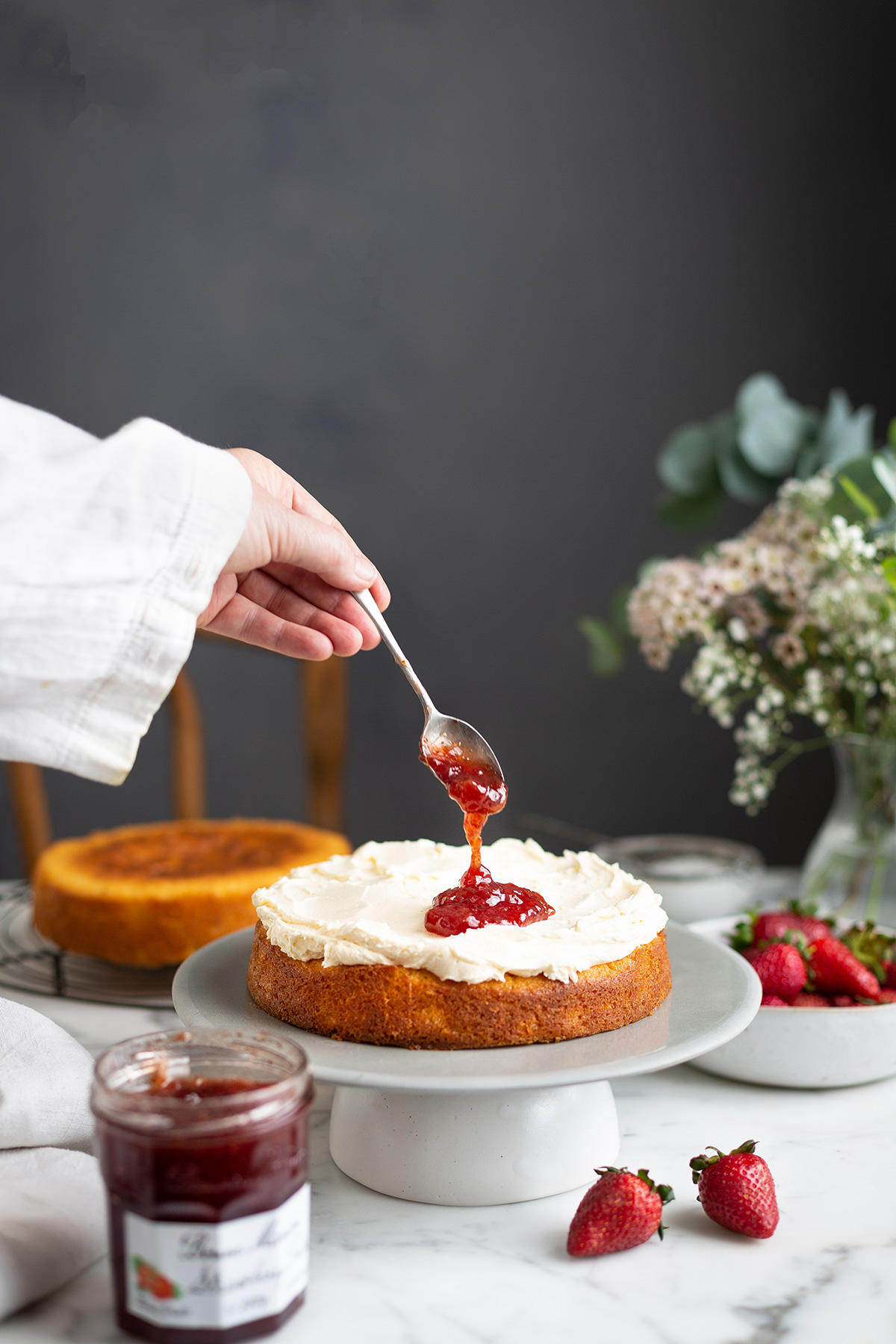
How to make a Victoria sponge cake
There are a few different ways to approach a Victoria sponge, but I find using an electric mixer to cream the butter, sugar, and eggs gives the most reliable result. Baking is a science, and the order of operations matters.
When you add eggs to a butter mixture, you’re making an emulsion. The fat from the butter emulsifies with the protein and water in the egg. Add the eggs one at a time and make sure each is fully incorporated before adding the next. I use the balloon whisk attachment on my stand mixer for this and it works beautifully.
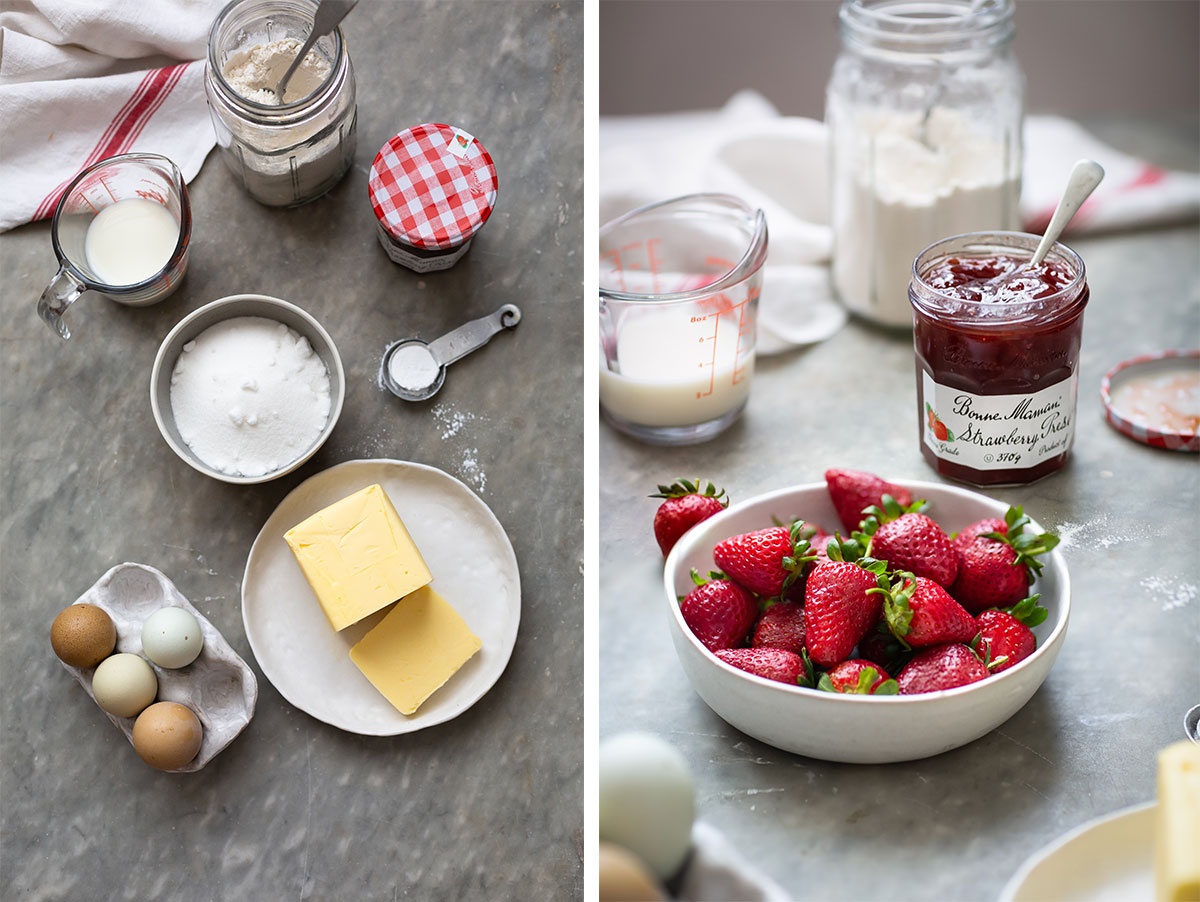
Egg size matters more than you’d think. Large eggs can cause the cake to sink in the middle during baking, so use only medium eggs. They also need to be at room temperature; cold eggs can prevent the emulsion from happening, which leads to a split batter and a flat cake. The same goes for the butter: it must be soft, at room temperature, for proper creaming.

Once the butter, sugar, and eggs are pale, voluminous, and emulsified, add the flour and milk in two parts and mix briefly on low just to incorporate. Never overmix once the flour goes in. I always sift the flour and baking powder twice – if you’re sifting once, you may as well go twice.
Vanilla isn’t traditional in a classic Victoria sponge, but I love a teaspoon in the batter and half a teaspoon in the buttercream. It makes the whole thing taste warmer and more rounded.
Don’t open the oven while the cakes are baking. A slight dip in the centre after baking is common and nothing to worry about. Just fill it generously with jam and buttercream (or cream), and no one will ever know.
FAQs For Victoria Sponge
Why did my Victoria sponge sink in the middle?
A few things can cause this. The most common culprits are using large eggs instead of medium, adding cold eggs to the butter mixture so the emulsion breaks, opening the oven door during baking, or underbaking. A slight dip is normal and easy to fill with jam. A more significant collapse usually points back to the emulsion step.
Can I make a Victoria sponge without self-raising flour?
Yes. Use plain flour and add 2 teaspoons of baking powder per 225 grams of flour in addition to the 1½ teaspoons already in the recipe. Sift well to distribute the raising agents evenly.

Can I make this cake in advance?
The unfilled sponge layers keep well at room temperature in an airtight container for up to two days. Assemble the cake on the day you plan to serve it, or the day before at the latest.
How do I store a Victoria sponge cake?
Store the assembled cake in an airtight container at room temperature for up to two to three days. If you’ve used fresh cream in the filling, keep it in the fridge and bring it to room temperature for about 20 minutes before serving, as cold butterfat dulls both the texture and flavour. The unfilled sponge layers freeze well: wrap each one tightly in cling film and then in foil, and freeze for up to three months. Thaw at room temperature, still wrapped, to avoid condensation making the sponge soggy.
Can I fill a Victoria sponge with something other than jam?
Absolutely. Any good-quality jam or preserve works here. Raspberry, apricot, and blackcurrant are all classic choices. You can also layer in lemon curd alongside the buttercream for a sharper, more citrusy result.

What cake tins do you use for a Victoria sponge?
Two 20cm (8-inch) loose-bottomed springform tins are the way to go. I tested putting all the batter into one tin and cutting it in half afterwards, but the rise was uneven in the middle. Splitting the batter between two tins gives you an even, consistent bake every time. Line the bottom and sides of both tins with baking paper.

Tips and substitutions
Use a good-quality strawberry preserve for the filling. The jam is one of only three components in this cake, so it earns its own quality check.
If you’d rather use fresh cream than buttercream, whip 125ml (½ cup) of double cream to soft peaks, then fold in 1 tablespoon of icing sugar and ½ teaspoon of vanilla to make a simple Chantilly cream. If you go this route, store the assembled cake in the fridge.
Sliced fresh strawberries or any seasonal berries scattered on top of the finished cake make it feel even more special.


Makes 1 cake – 8 -10
Classic Victoria Sponge Cake Recipe with Jam and Buttercream
Ingredients
Cake:
- 225 grams salted butter at room temperatire
- 225 grams caster sugar
- 4 medium free-range eggs
- 1 tsp vanilla extract
- 225 grams self-raising flour
- 1 ½ tsp baking powder
- 100 ml milk
Icing/frosting filling:
- 100 grams butter softened
- 140 grams icing sugar sifted
- ½ tsp vanilla extract
- 1-2 tsp milk
- Approx. – 160gms Bonne Maman Strawberry preserve
- Icing sugar for dusting
Instructions
- Preheat the oven to 190C/375F and line two 20cm springform baking tins with baking paper.
- Using an electric mixer, beat the butter and caster sugar until pale and fluffy, about 3 minutes.
- Add each egg one at a time, ensuring it’s well incorporated before adding the next one. Add the vanilla extract.
- Sift the flour and baking powder twice and then add that to the cake batter while mixing on low. Add the milk and briefly whisk to combine. Do not over mix.
- Scrape down the bowl of the mixer and divide the batter evenly between the 2 cake tins. Even the top out with a spatula.
- Bake for 20 – 25 minutes until golden brown and springy to the touch. The cake is done when you insert a sharp knife into the middle and it comes out clean. If necessary and to prevent over-browning, loosely cover the cakes from about 10 minutes into the baking time.
- Cool on a rack.
- Make the icing by whisking all the ingredients until pale and fluffy.
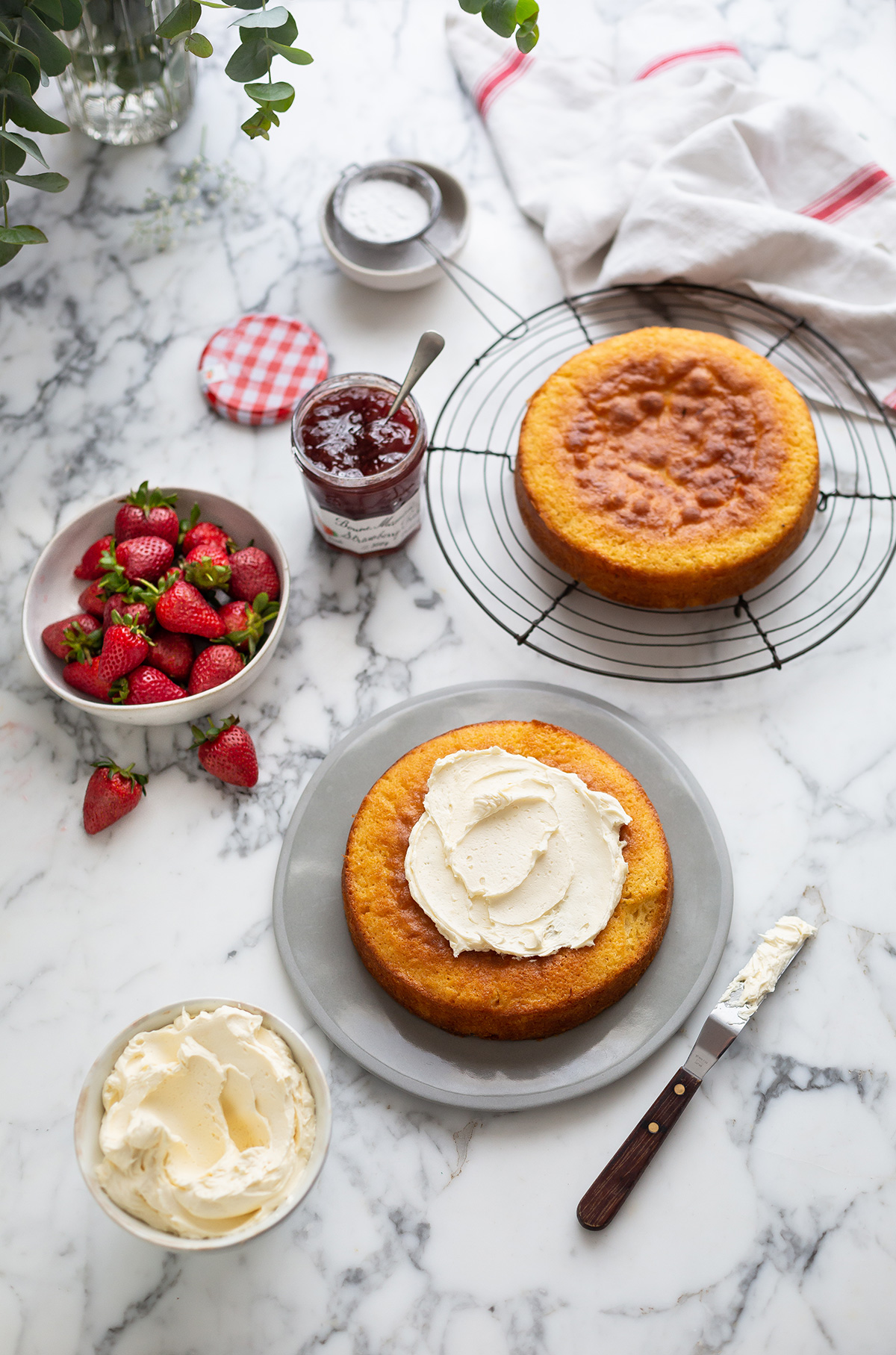
- Assemble the cake starting with a layer of icing then a layer of Bonne Maman jam. Place the second layer on top and dust with icing sugar.
Notes
Storage Instructions for a Classic Victoria Sponge Cake
-
At Room Temperature:
- Store the cake in an airtight container or cover it with plastic wrap to keep it fresh.
- Keep at room temperature for up to 2–3 days in a cool, dry place away from direct sunlight.
-
In the Refrigerator:
- If the cake contains fresh cream or perishable fillings, store it in the fridge in an airtight container.
- Allow the cake to come to room temperature before serving for the best texture and flavour.
- Can be stored in the fridge for up to 3–4 days.
-
Freezing the Cake:
- Unfilled Cake Layers: Wrap each layer tightly in plastic wrap, then in aluminium foil, or place in a freezer-safe container.
- Filled and Assembled Cake: Wrap the entire cake in plastic wrap, followed by aluminium foil, or place it in a large, airtight container.
- Freeze for up to 3 months.
-
Defrosting:
- To thaw, remove the cake from the freezer and leave it wrapped at room temperature for a few hours or overnight.
- Unwrap only after it’s fully defrosted to prevent condensation from making the cake soggy.
You may also like:
My best baking recipes on Drizzleanddip
My best spiced date cake and maple cream cheese frosting
Spiced date cake with cream cheese and honey frosting
*This post is proudly sponsored by Bonne Maman
BUY MY eBOOK COMFORT
Find me on Instagram & Pinterest

HI Suzanne – I am disappointed you rated my recipe a 3 when you made so many changes to it and things went wrong. You cant expect a recipe to come out the way I made it if you change it so much. Firstly as I state in the long preamble, the quantities of ingredients are very important here, and even using a large egg vs a medium will change the ratios. You have changed the ratios of key ingredients plus you have mixed them in such a way that they did not emulsify and the batter split. Lemon zest and a little juice should not have split the batter at the end if it was already emulsified, but I suspect you either added too much juice or it wasn’t emulsified to start with. This will cause a victorian sponge to flop. Perhaps better for you to search for a lemon cake on the internet if that is what you are after. Find a recipe you don’t need to change and one that will work and has been tested. I mentioned all this upfront and this recipe is meant to be made exactly as I did use my exact quantities. I tripe tested this recipe so I know my method works.
Best
Sam
Just a lovely, fool proof recipe. I appreciate the in depth “pre” explanation for why you use certain ingredients, etc. It makes visualizing the final bake easier, as well as the actual method(when actually preparing the recipe). Thank you!
I am so glad you liked it Jennifer. Its one of my faves.
I made this Victoria Sponge Cake for the first time today and it was amazing. I couldn’t find medium size eggs anywhere so used the smallest “large” size eggs I could find and it still turned out perfectly. Will definitely be making this again! Thank you for another great recipe
Thanks, Lindsay and glad you enjoyed the recipe. Its a fave.
Hi sam
I made this and loved it! I was wondering whether you had adjustments for a 23 cm spring form pan? I’d like to make a tiered cake but would like the layers to be of equal thickness.
Thanks! Ash
Hi Ash – since I made these in 20cm cake tins to get 2 thicker halves. 23cm will be too thin for more than 2 layers. If you wanted to make 3 layers I would suggest dividing the cake bater equally between 3 x 18cm cake tins. 2 layers is classic for Victoria sponge and its quite delicate so make multiple tiers might e trick without supportive boards and dowels. I’m not sure how many layers you are wanting to go with when you say tier?
I made this today and am pleased with the result and found the instructions easy to follow. One thought, I do wonder if it should specify the butter should be soft or room temp for the creaming with the sugar? I would usually do this but didn’t today because it didn’t say to (but does for the icing). It was too difficult to cream together, so I gently heated the mix over a bowl of warm water which made it much easier.
Hi Laura, thanks for your feedback. I always use room temperature ingredients in ALL my baking unless I’m making pastry and scones. It would be very difficult to cream cold butter (ever). I will update the recipe accordingly. I seem to have been remiss in mentioning it this one time.