

Easy Butternut Scones with Cheese and Chives
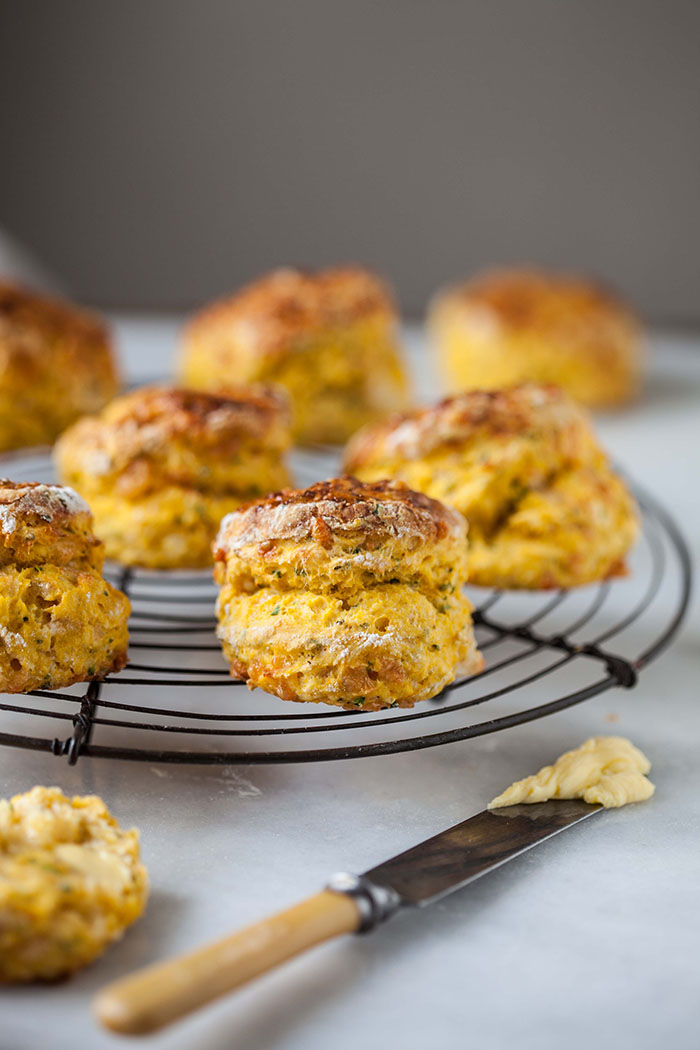
These butternut scones are everything a savoury scone should be: light, fluffy, and packed with flavour. Butternut purée goes into the dough alongside a combination of Gruyère (or mature Cheddar) and Parmesan, with fresh chives running through every bite. They come together quickly, bake in 20 minutes, and are best eaten warm straight from the oven with a generous amount of butter.
Butternut is a far more common squash than pumpkin in South Africa, which makes this recipe one you can make almost year-round. The purée adds moisture and a very subtle sweetness to the dough that works beautifully against the nuttiness of the Gruyère (mature Cheddar). If you enjoy savoury scones, also have a look at my easy pumpkin scones with Parmesan and thyme, which use a similar base with a different cheese and herb combination.

The Cheese
The combination of Gruyère and Parmesan is what makes these scones. Parmesan adds a sharp, salty depth, and Gruyère brings a nuttiness that pairs naturally with butternut. If you cannot find Gruyère, Dalewood Fromage Huguenot is an excellent local substitute with a very similar character. A good-aged Cheddar also works well and yields a slightly sharper result.
Grate the cheese yourself rather than buying pre-grated. Pre-grated cheese is coated in anti-caking agents that prevent it from melting and incorporating as well into the dough.

Tips for Light, Fluffy Scones
The number one rule with scones is do not overwork the dough. Mix everything with a knife until it just comes together, then stop. A short, light knead on a floured surface is all you need before patting the dough out.
Pat the dough rather than rolling it. Rolling compresses the layers and results in a denser scone. Press the dough to about 4 to 5cm thick, which gives you height to work with.
Use a sharp cookie cutter and dip it in flour before each cut. Press straight down and lift straight up without twisting. Twisting seals the edges and stops the scone from rising evenly.
Brush only the tops with egg wash, never the sides. The egg wash on the sides acts as a seal and prevents the scone from rising fully.

How Much Butternut Purée Do You Need?
The recipe uses 350 grams of raw butternut, which yields approximately 250 to 275 grams of cooked purée once steamed and blended. If you are using frozen butternut or pre-cooked butternut from the freezer section, aim for roughly 1 cup (250 ml) of purée. Make sure it is well drained and not watery before adding it to the dough, as excess moisture will affect the texture.

Serving Suggestions
These scones are best eaten warm on the day they are baked, with plenty of butter and perhaps an extra pinch of flaky salt. A slice of smoked ham tucked inside makes a genuinely good quick lunch. They also work well alongside a bowl of soup in winter.

FAQs for butternut scones with cheese
Can I make butternut scones without buttermilk?
Yes. If you do not have buttermilk, add a tablespoon of lemon juice or white vinegar to 125 ml of regular full-fat milk and let it sit for five minutes before using. It will curdle slightly, which is exactly what you want. The acidity reacts with the raising agents in the self-raising flour to help the scones rise.
Can I use pumpkin instead of butternut?
Yes. Cooked pumpkin purée works in exactly the same way. The flavour is slightly different, earthier and less sweet than butternut, but the recipe works perfectly. For a pumpkin version with Parmesan and thyme, see my easy pumpkin scones with Parmesan and thyme.
Can I use tinned pumpkin purée?
Yes. Use the same quantity of tinned pumpkin purée (approximately 1 cup / 250 ml) in place of the steamed and blended fresh butternut. Make sure it is plain pumpkin purée and not pumpkin pie filling, which is sweetened and spiced.
How thick should I pat the scone dough?
About 4 to 5cm. This gives you enough height for the scone to rise well in the oven and create that characteristic split in the middle. Thinner dough produces flat, dense scones.

Why did my scones not rise?
The most common reasons are overworked dough, a blunt cutter that was twisted rather than pressed straight down, egg wash on the sides of the scones, or dough that was patted too thin. Self-raising flour also loses its potency over time, so check that yours is fresh.
Can I make these scones ahead of time?
Scones are best eaten on the day they are baked. If you want to get ahead, you can cut the scones and freeze them unbaked on a lined tray until solid, then transfer to a zip-lock bag. Bake from frozen at 200°C (400°F) for 25 to 30 minutes. You can also bake them ahead and freeze once cooled.
What seeds work best on top?
Sunflower seeds and pumpkin seeds both work well and complement the butternut flavour naturally. Sesame seeds are another option. The seeds are optional but add a nice crunch and make the scones look beautiful.
Can I use other herbs?
You can use other herbs if you prefer. Chopped parsley, thyme, and Rosemary work well. Parsley can replace the chives for a neutral flavour, or use a combination of oth.

Recipe – makes 10 – 12 scones
Easy Butternut Scones with Cheese and Chives Recipe

Ingredients
- 350 grams butternut peeled and cut into cubes (yields approximately 1 cup / 250 ml cooked purée)
- 310 grams 2½ cups self-raising flour
- 50 grams ½ cup Parmesan, finely grated
- 100 grams ½ cup Gruyère or Dalewood Fromage Huguenot, grated
- ½ tsp salt
- ½ tsp black pepper
- 4 Tbsp fresh chives finely chopped
- 125 ml ½ cup buttermilk
For the egg wash:
- 1 egg yolk
- 1 Tbsp buttermilk
- 3 Tbsp sunflower or pumpkin seeds optional
Instructions
- Preheat the oven to 200°C (400°F). Line a baking tray with baking paper.
- Steam the butternut in a basket over boiling water with the lid on for 10 to 15 minutes until completely soft. Set aside to cool and allow the steam to evaporate. Blend until smooth using a food processor or immersion blender, or mash well by hand. Allow to cool completely before using.
- Mix the flour, both cheeses, chives, salt and pepper together in a large bowl.
- Add the buttermilk and cooled butternut purée to the dry ingredients. Using a knife, mix lightly until the dough just comes together. Do not overwork it.
- Turn the dough out onto a lightly floured surface and knead very briefly, just enough to bring it together. Pat the dough to approximately 4 to 5cm thick.
- Dip a 5 to 6cm round cookie cutter in flour and cut straight down through the dough without twisting. Place the scones on the lined baking tray.
- Whisk the egg yolk and buttermilk together and brush only the tops of the scones. Scatter over the seeds if using.
- Bake for 20 to 25 minutes until golden brown. Serve warm with butter.
Notes
More Recipes You’ll Love
Easy pumpkin scones with Parmesan and thyme
How to make the best blueberry and lemon scones in one bowl
Quick and easy cranberry and orange scones
Easy lemonade scones with cheese and herbs
My best baking recipes on Drizzle and Dip
BUY MY eBOOK COMFORT
Find me on Instagram & Pinterest
Cooking Conversion Chart & Calculator

I love a good savory scone, these look divine!
These are beautiful!
I have some butternut languishing in my kitchen and am going to make these pronto! Delicious breakfast scones for the next few days 🙂
Love the colour on those scones, they look delicious!
I do love scones!! These look tasty!!
Oh yum! I just the most wonderful scone in Scotland. I think if you add a slathering of cream cheese and a piece of smoked salmon it would be pretty much the same. I’m now in Iceland and I don’t think they have chives and Gruyere cheese here, but I’ll have a quick look.
Wow these looks delicious! I need to make them this weekend. Beautiful photos, as always!
Thanks Louisa
What is the amount (in ounces, cups, etc.) of cooked, mashed butternut squash used? I don’t also buy fresh and have the mashed kind available to me in the freezer section of my supermarket.
Hi Adam, Im sorry but I didnt measure the quantitiy of cooked butternut. I will try and add this in as soon as I can. We dont get ready processed pumpkin in a tin here. 350g = 9.9 oz (raw). the cooked weith will be a little less I think.
Hi there, just wondering if you could estimate how much Gruyere in grams you would need to have 1/2 a cup of grated Gruyere? Many thanks!
Hi – I would say about 100gms
sam