

Healthy Slow Cooker Korean-Style Beef Recipe (High Protein)
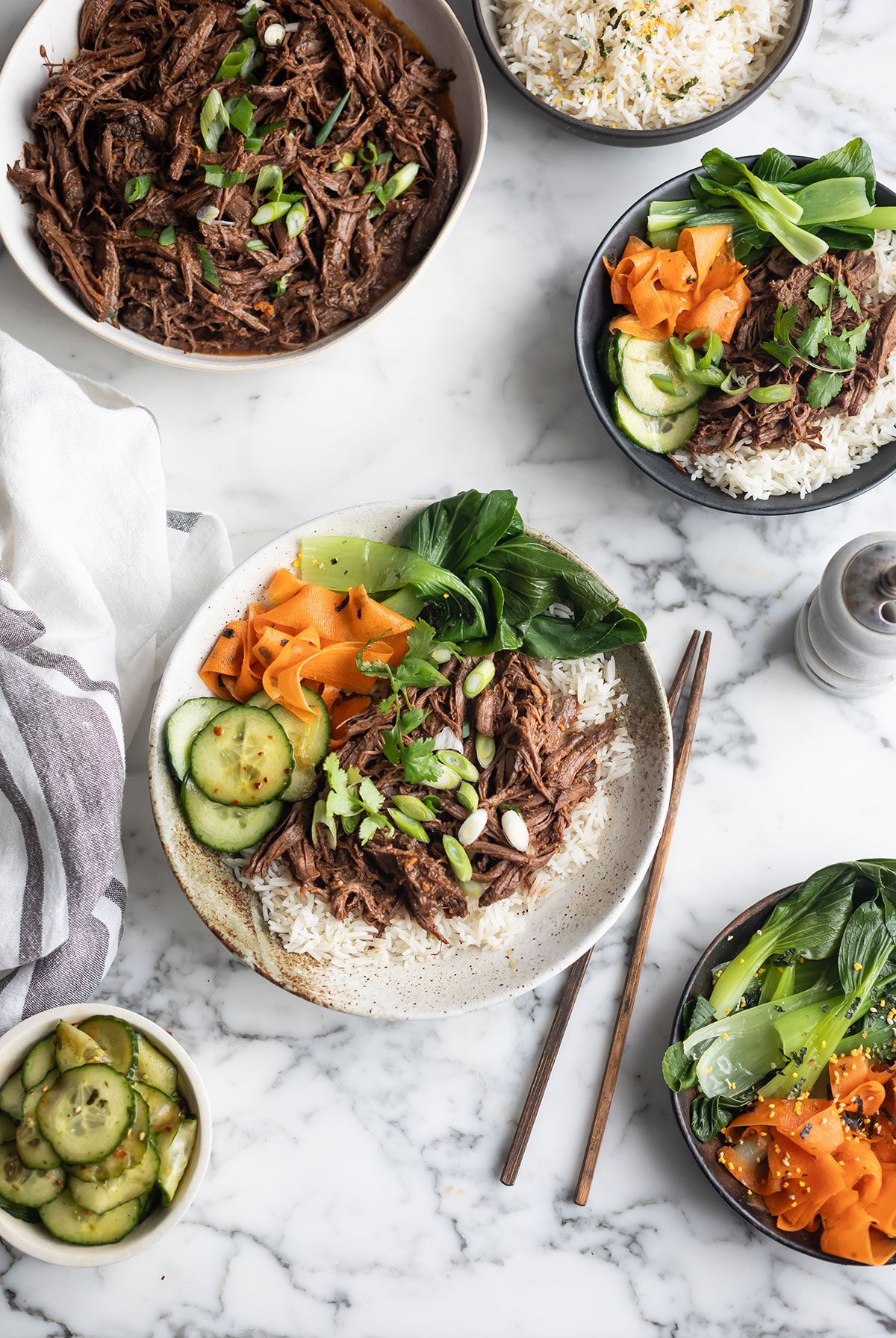
This slow-cooker Korean-style beef is high-protein, and the gochujang-spiked sauce turns the meat juicy and tender. The meat can be eaten with rice and side salads, or served. In lettuce wraps or bao. As with most slow cooker recipes, it’s very much a set-and-forget situation.
I used the Instant Pot, which gave me a perfectly tender result in four hours on low. If you are using a different slow cooker, the times might vary, so just keep cooking it until you get to this stage.

Which Cut of Beef to Use
I initially wanted beef chuck or short ribs for this recipe, but on closer inspection at the butcher both were cut too thinly, loaded with fat, and the chuck was on the bone. I ended up using Frankie Fenner flank steak, also called bavette, which looked beautiful and has wonderful flavour.
Flank is a lean cut typically cooked quickly over high heat, so using it low and slow is the opposite of the usual approach. It works remarkably well. The long cooking time breaks down the fibres until the meat shreds easily, and the leanness means the final dish is not greasy or heavy. If you can find chuck trimmed of its fat, or leaner short ribs, those would also be excellent.

The Korean-Inspired Marinade
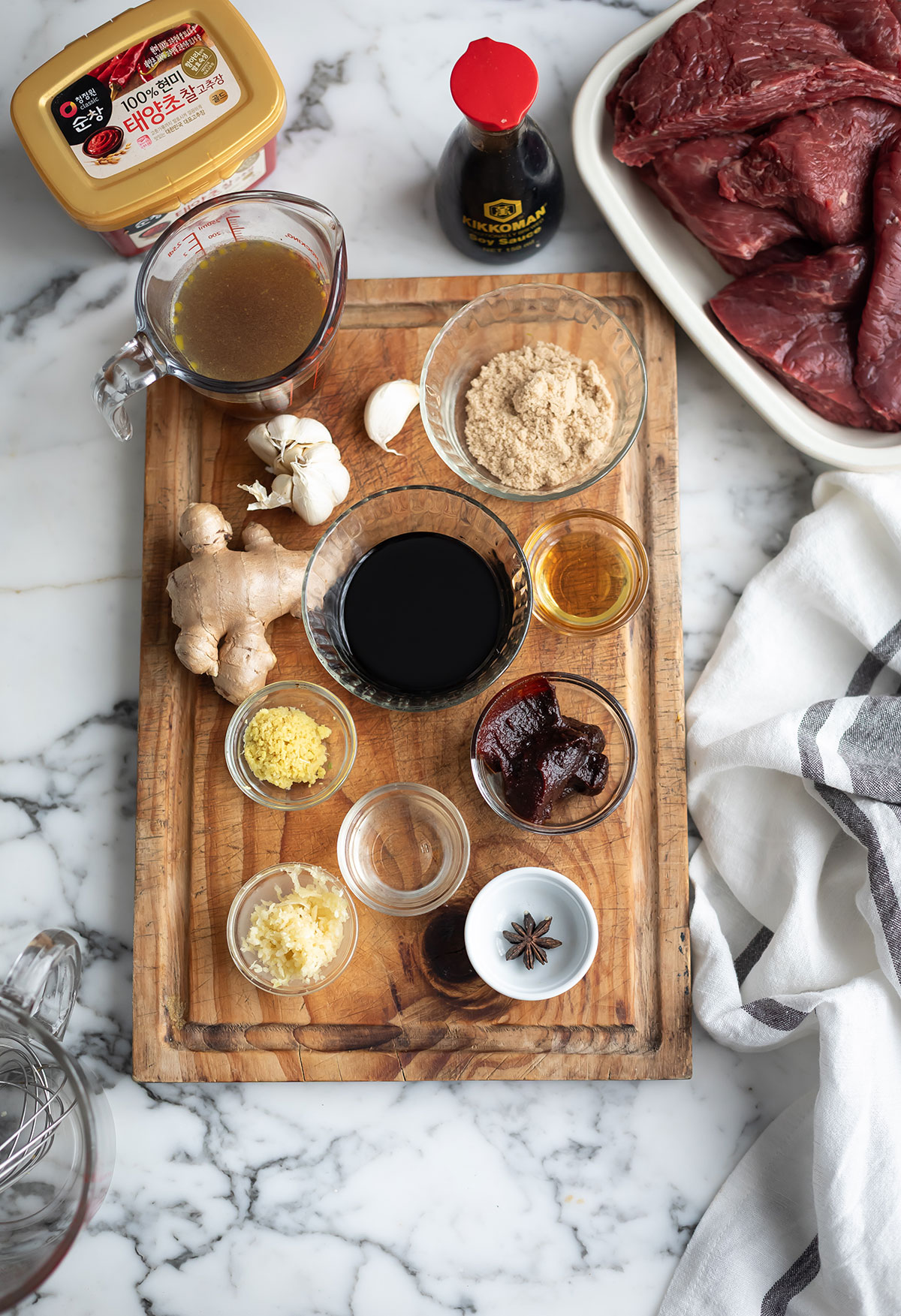
The sauce is built on gochujang, the fermented Korean chilli paste that gives this dish its distinctive warmth and depth. It is not aggressively hot, but it has a complex, slightly sweet heat that mellows further once the shredded meat soaks it all back up. If you want more fire, add an extra tablespoon of gochujang. If you are cooking for children or people who are sensitive to heat, reduce it to one and a half tablespoons.
Soy sauce, sesame oil, rice vinegar, ginger, garlic and a little brown sugar round out the sauce. The star anise is optional but adds a subtle anise warmth that works well with the beef. When the meat goes in, the liquid looks like a lot. By the time the meat shreds and gets tossed back through, it absorbs beautifully and the sauce coats every strand.
Why the Fresh Sides Matter
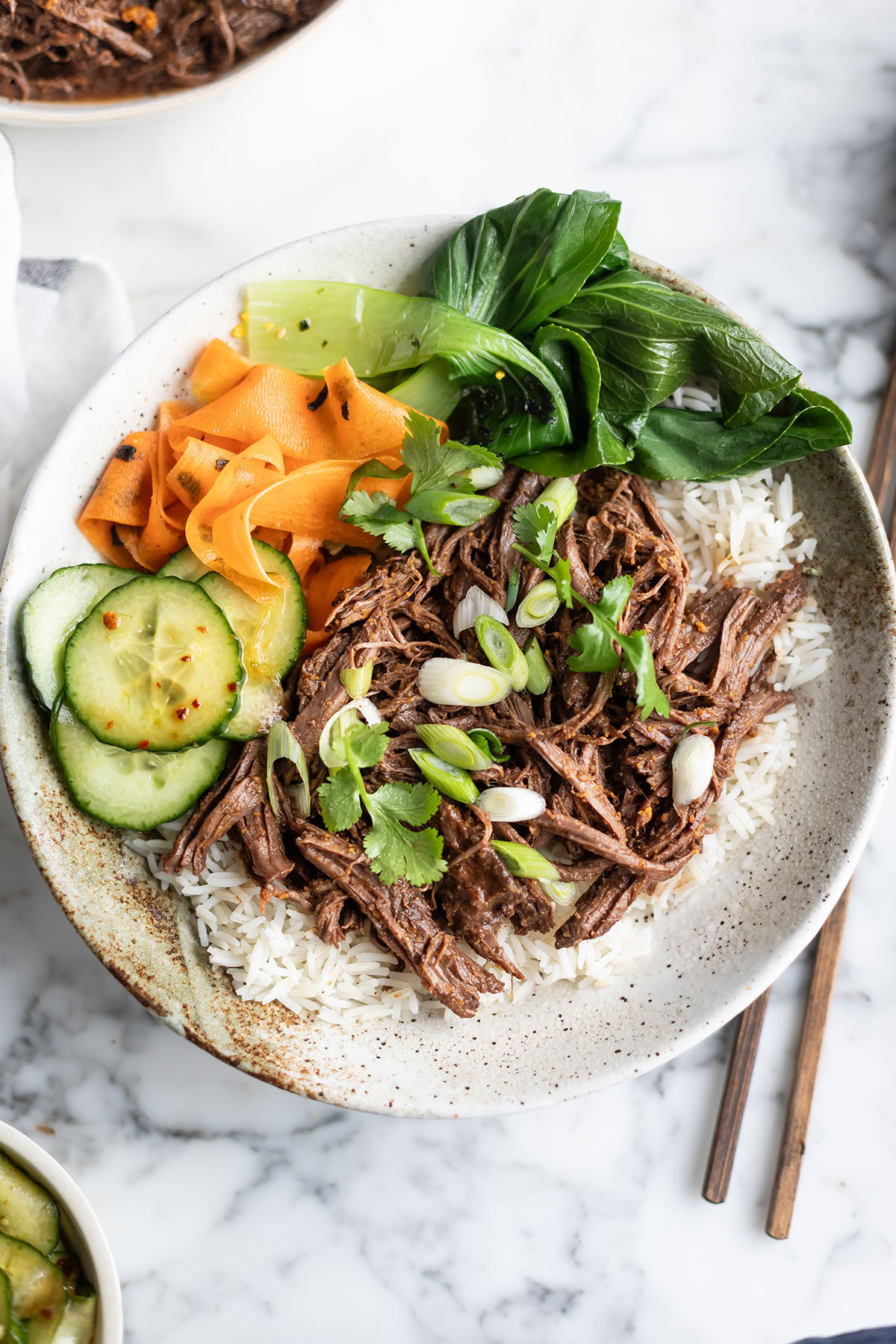
This dish really needs the freshness of raw elements alongside it. The beef is rich and intensely flavoured, and without something cool, crunchy and clean on the plate, it can feel heavy. I served it with basmati rice, sliced spring onions, my best easy cucumber salad, steamed bok choy and a quick carrot salad. Jasmine rice is also lovely here.
Kimchi is the classic condiment and is worth including if you can find it. Any quick pickle works well too. Do not skip the fresh elements; they are not optional garnishes; they complete the dish.

Making This Ahead
The beef can be made up to two days ahead and reheated gently on the stovetop or in the microwave. It also freezes well, which makes it a strong batch cooking candidate. Make a full batch, freeze half in portions, and you have an easy high-protein dinner ready to go on a weeknight.
FAQs for Slow Cooker Korean-Style beef
Can I use a different cut of beef?
Yes. Beef chuck trimmed of excess fat is the most natural substitute and would give a slightly richer result. Leaner short ribs also work well.
What is gochujang?
Gochujang is a Korean fermented chilli paste made from red chilli, glutinous rice, fermented soybeans and salt. It has a complex, slightly sweet and deeply savoury heat that is quite different from other chilli pastes. It is available in most large supermarkets, Asian grocery stores, and online. It keeps in the fridge for months once opened.
Can I make this in an oven instead of a slow cooker?
Yes. Place the beef and sauce in a lidded casserole dish and cook at 160°C (325°F) for 3 to 4 hours until the meat shreds easily. Check occasionally and add a splash of water or stock if the sauce reduces too much.
SponsoredDiscover top exclusive offers today!
Click here to learn more and take advantage of these limited-time deals.
How do I know when the beef is ready?
The beef is ready when it shreds easily with two forks. If it is still resisting, put the lid back on and keep cooking. Flank steak cooked on low in a slow cooker typically takes 4 hours, but every slow cooker runs slightly differently, so use the shred test rather than the clock.
Is this recipe spicy?
Mildly to moderately spicy depending on how much gochujang you use. At 2.5 to 3 tablespoons, it has a pleasant warmth rather than aggressive heat, which mellows further once the meat soaks up the sauce. Reduce to 1.5 tablespoons for a milder result or increase for more heat.
Can I freeze the cooked beef?
Yes. Allow the shredded beef to cool completely, then freeze in an airtight container or zip-lock bag for up to 3 months. Defrost overnight in the fridge and reheat gently on the stovetop with a splash of water or stock to loosen the sauce.

Healthy Slow Cooker Korean-Style Beef Recipe

Equipment
- Slow cooker
Ingredients
Ingredients:
- 1.3 kg beef flank steak bavette, or chuck trimmed of fat
- 1 Tbsp fresh ginger finely grated
- 2.5 to 3 Tbsp gochujang Korean chilli paste
- 3 cloves garlic crushed
- 3 Tbsp soy sauce
- 1 Tbsp rice vinegar
- 1 Tbsp sesame oil reduce to 1 tsp if using a fattier cut
- 2 Tbsp brown sugar
- 200 ml beef stock
- 1 star anise pod optional
To serve:
- Basmati or jasmine rice
- Sliced spring onions
- Steamed bok choy
- Cucumber salad
- Quick carrot salad
- Kimchi or any pickle of your choice
Instructions
- Place the beef in the base of your slow cooker. If the pieces are large, cut them to fit in a single layer.
- Mix together the ginger, gochujang, garlic, soy sauce, rice vinegar, sesame oil, brown sugar and beef stock until well combined. Pour over the beef. Add the star anise if using.
- Cook on low for 4 hours, or until the meat shreds easily when pulled with two forks. Cooking times vary between slow cookers so use the shred test rather than the clock.
- Remove the star anise. Shred the meat directly in the slow cooker using two forks, then toss it through the sauce until every strand is coated.
- Serve over rice with sliced spring onions, steamed bok choy, cucumber salad, carrot salad and kimchi alongside.
Notes
More Recipes You’ll Love
The Best Easy Beef Bulgogi Recipe (Korean Grilled Beef)
Easy & Healthy Beef San Choy Bow In Lettuce Wraps
The Viral Cucumber Salad Recipe You’ll Eat Every Week
Carrot And Cabbage Salad With Citrus Ginger Dressing
BUY MY eBOOK COMFORT
Find me on Instagram & Pinterest
Cooking Conversion Chart & Calculator
