

Honey & rooibos granita gin & tonic

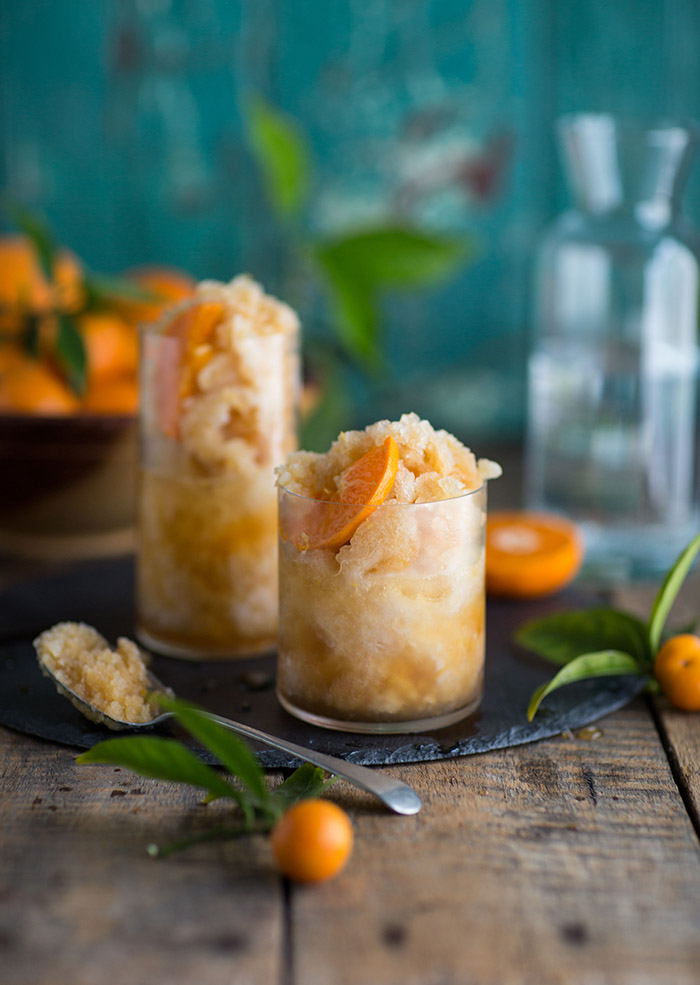
This honey and Rooibos tea granita gin and tonic is like eating a frozen spring garden with all the earthy, floral, and fruity flavours you would imagine it tasted like. The recipe comes from Babylonstoren, where you will also find the most exquisite food garden in South Africa and maybe even the world. It’s one of my favourite places to go to feel reminded about the perfections of Mother Nature. Any season, whether summer or winter (and everything in between), it’s beautiful and inspiring. Alive with small animals, birds and millions of insects, my favourite of all being the honeybee.

Bees are little miracle workers who are responsible for around a third of all the food we eat. They live for about 6 weeks and literally work themselves to death – beating their wings 200 times per second, pollinating plants, and making honey.

99% of all bees are female – the worker bees, and you will always hear bee experts refer to them in the feminine. Every little thing about a bee is fascinating to me, so I was thrilled to have been invited to the recent Bee Workshop at Babylonstoren.


I attended a full-day workshop at Babylonstoren hosted by Mike Allsop from the Plant Protection Research Institution, who shared as much of his vast knowledge as the time frame would allow. We learned that bees had been in Africa for thousands of years. Still, commercial beekeeping only started around the 1920s after the establishment of Eucalyptus plantations (this is a really important food for the bees).

The day involved a guided walk through the garden to examine the types of plants bees like to forage on, lectures, lunch in the Greenhouse, and an opportunity to put on a bee suit and open up the hives.

The demand for bees has increased 400% because our food needs are changing. The human population increases and the demand for non-seasonal fruit and vegetables puts pressure on bees to pollinate. This along with chemical farming and monoculture agriculture have an interlinked and adverse effect on bees.
“Whatever affects one directly, affects all indirectly….This is the interrelated structure of reality”. – Martin Luther King, Jr.
The bee problems are part of a bigger problem – a sign that our food system, as it currently stands, is not sustainable. I highly recommend two films on bees, which do a deep dive into a few of the issues. ‘More than Honey‘, and ‘The Vanishing Of The Bees‘.
What can we do about the bee problem?
When faced with such a huge and complex issue as the bee crisis, it’s difficult to imagine that we as individuals could have any influence on the improvement of the overall situation as this really is a problem that needs to be addressed at the government level. However, as with any major environmental crisis, we can all play our small part. Like with recycling, minimising waste and rejecting bottled water, we can make choices every day that are friendlier to bees and become part of the solution.
‘Nurture the food systems that will take better care of the bees’ – Michael Pollan
- Support diversified and organic farming systems.
- Create a garden filled with plants bees love to feed on instead of planting a wasteful and useless lawns.
- Make decisions three times a day when deciding what you eat, and eat food that comes from sources that are kinder to bees. Vote with your fork.
- Take up beekeeping as a hobby if you have enough garden space to allow it.
- Protest and ban the use of harmful pesticides in farming.
- Become aware and spread your knowledge to make others aware and conscious.
- Support organizations that fund research and lobby government.

Honey is the delicious product we get from bees, make sure when you buy it you look for more expensive, raw varieties that come from farmers that look after their animals. A bee produces one teaspoon of honey in its lifetime, this is nowhere near a commodity food item.


*Cooks Notes ~ I altered the quantity of honey to 250ml as I felt that was sweet enough. I increased the aromatics a little but think one can throw in a few more as the flavours as very subtle
Recipe – Slightly adapted from Babylonstoren
Honey & rooibos granita gin & tonic
Ingredients
- 1 Litre Rooibos tea brewed
- 250 ml honey
- 4 juniper berries
- 2 star anise
- 4 white peppercorns
- 60 ml lemon juice & grated rind of 1 lemon
- 1 orange or clementine
- gin
- tonic water
Instructions
- Simmer the tea, honey, juniper berries, star anise and white peppercorns for 10 minutes.
- Remove and strain through a cloth or fine sieve.
- Add 60 ml lemon juice and the grated rind of 1 lemon and place in the freezer. When the icicles start to form, loosen the mixture with a fork. Place back in the freezer and loosen again after 2 hours. Freeze once more, loosening again before use.
- Add a tot of gin to each glass.
- Spoon the granita to fill the whole glass and add the tonic water. Garnish with a slice of orange or lemon.
Notes
Another idea:
For Rooibos Granita, follow the recipe as above and add 400 ml crushed strawberries, raspberries or blackberries, or 400 ml grated pineapple, or 400 ml grapefruit juice after 2 hours. Freeze and loosen again before use.
A few other drinks you might like
How to make the best gin & tonic
Lemon sorbet infused with thyme then turned into a gin and tonic
Gin & tonic with lemon cordial & rosemary
South African Recipes: My Collection Of Classics And Favourites
BUY MY eBOOK COMFORT
Find me on Instagram & Pinterest

Babylonstoren sounds amazing ! What a great workshop to attend Sam. Thanks for sharing.
I love this – all about how precious our earth is and we can make a difference by what we buy! thanks for standing up for this Sam.
Thanks Bernice, Yeah the more I discover things about bees the more passionate I am becoming. They spend their whole life working for others. Amazing creatures.
agreed Sam- We often put our head in the sand and think we can’t make a difference(me included) but I have become more proactive and WE CAN MAKE A DIFFERENCE. Recycle, buy good food farmed well by good methods, look after the bees, vote with your rand in what you are purchasing, drink filtered water from home etc. Thanks for this Monday inspiration – BEES ROCK! hugs
Such incredibly gorgeous photos Sam!!! This is a subject close to my heart! Thanks for posting such an important topic and a well written post!!! I am so happy that there are more and more organic farmers and produce to be had. Bees do rock 😀
Very creative! Love the recipe and photographs!
Thanks Sabrina 🙂
Thanks Steph, I hope that i can create a little awareness and will keep trying