

The Best No-Knead Focaccia Recipe (Overnight or Same-Day)
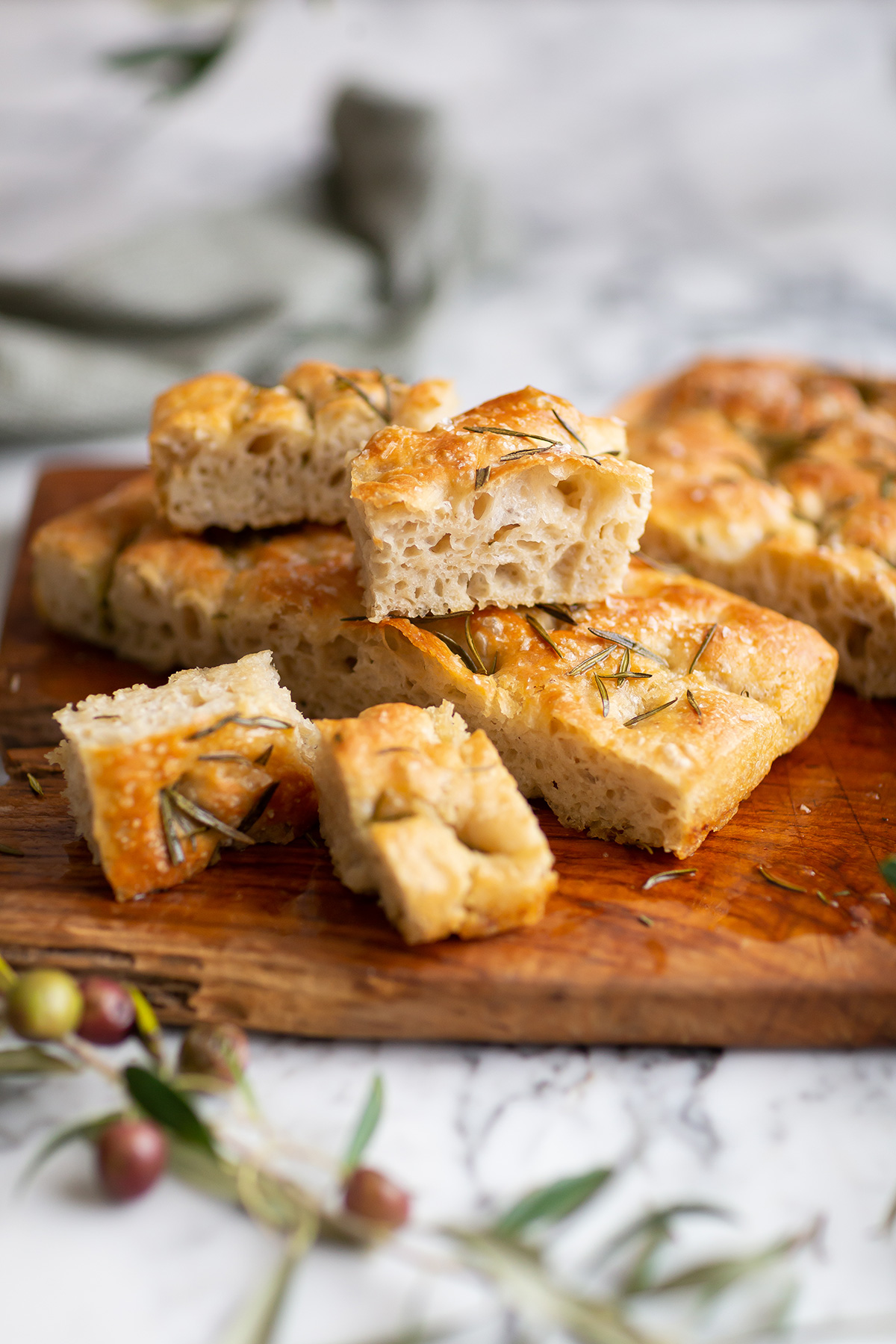
This easy no-knead focaccia is the most forgiving bread recipe you will ever make. The dough comes together in about 10 minutes, there is no kneading whatsoever, and the long rise does all the work for you. It bakes up golden and crispy on the outside with a soft, airy crumb full of olive oil flavour. If you are at all hesitant about baking yeasted bread, this is the one to try.
The dough is a high-hydration recipe, so it is very soft, bubbly and sticky. That is exactly how it should be. Very little intervention is required once you have mixed the ingredients and put it in the fridge. You can make the dough on the same day and leave it to rise at room temperature for 2 to 3 hours, but I prefer the overnight method. The flavour develops more, and more bubbles form during the cold rise. Those bubbles create the signature air pockets that make focaccia what it is.

A lot of olive oil goes into this recipe, and it is where all the flavour lies. Use the best quality extra virgin olive oil you can find. I used Babylonstoren’s Frantoio, a single-variety extra virgin olive oil with an intense green hue and a herbaceous, peppery flavour that works beautifully in this bread. Their range also includes a Coratina and a blended extra virgin, all of which are excellent for baking and finishing.
Focaccia is also the easiest bread to make alongside my easy no-knead ciabatta, which uses a stand mixer rather than a slow rise.

Tips for the Best No-Knead Focaccia
The water temperature matters. Mix 1.5 cups of tap water with half a cup of boiling water to get the ideal warmth for activating the yeast without killing it.
Grease your baking sheet generously with butter first to prevent sticking, then spread olive oil over the top. The butter stops the dough from bonding to the pan, and the olive oil fries the base into a golden crust.
When you tip the dough onto the baking sheet, it will not fill the corners straight away. That is fine. Pull it into a rough rectangle and leave it in a warm spot. It will naturally expand into the edges as it rises over the next 2 to 4 hours.
Dimple the dough with oiled fingers just before baking. This creates those classic focaccia wells that pool with olive oil and crisp up in the oven. Be generous with the rosemary and sea salt flakes at this stage.
Remove the baked focaccia from the pan immediately and cool it on a wire rack. If you leave it in the pan, the bottom will steam and go soft rather than staying crisp.

Frequently Asked Questions No-Knead Focaccia
Can I make focaccia dough on the same day?
Yes. Instead of refrigerating the dough overnight, leave it covered at room temperature until it has doubled in size, about 2 to 3 hours depending on how warm your kitchen is. The overnight method gives a better flavour, but the same-day version is still excellent.
How long can I keep focaccia dough in the fridge?
Up to two days. The longer it sits, the more flavour develops. Just make sure the bowl is sealed tightly with cling film.
Why is my focaccia dense and not airy?
The most common reason is not giving the dough enough time to rise after shaping. It needs 2 to 4 hours at room temperature on the baking sheet before going into the oven. The dough should be soft, jiggly and covered in bubbles before you bake it.
What temperature should I bake focaccia at?
220°C (425°F). A hot oven is essential for getting that golden, crispy crust. Do not open the oven door during the first 15 minutes of baking.
Can I use plain flour instead of bread flour?
You can, but bread flour gives a better result. It has a higher protein content, which creates more gluten and gives the focaccia its characteristic chewiness and structure. Plain flour will produce a softer, more cake-like texture.
Can I freeze focaccia bread?
Yes. Wrap the cooled focaccia tightly in cling film and then foil. It freezes well for up to two months. Defrost at room temperature and reheat in a hot oven at 200°C (400°F) for 5 to 8 minutes to crisp up the crust.
How do I reheat focaccia?
Warm it in the oven at 180°C (350°F) for 5 to 8 minutes. Avoid the microwave as it will make the bread soft and chewy rather than crisp. You can also slice it and toast it in a griddle pan.

Focaccia Topping Ideas
Rosemary and flaky sea salt is the classic combination, but focaccia can handle a lot of toppings. Some of my favourites include sundried or fresh cherry tomatoes, confit garlic cloves, caramelised onions or shallots, olives, roasted red pepper, thin slices of potato with rosemary, sliced courgette, mozzarella or blue cheese, and deli meats like salami or pancetta. You can also go sweet with red grapes, or try pear with blue cheese and walnuts.
If you love the idea of a loaded focaccia, try my no-knead focaccia shallot pissaladière, which takes the same base dough and turns it into something spectacular.
Easy No-Knead Focaccia Bread Recipe

Ingredients
- 500 grams 4 cups flour white bread flour
- 2 tsp 8gm instant yeast
- 1 ¾ tsp salt
- 500 ml 2 cups of warm water
- 1 tsp honey or brown sugar
- 1 tbsp butter
- 2 – 3 Tbsp extra virgin olive oil + a few more for coating and drizzling on top
- leaves stripped from a few sprigs of rosemary be generous here
- Sea salt flakes such as Maldon
Instructions
- Make 1 – 2 days in advance.
- Mix the flour, yeast, and salt in a bowl with a whisk. In a measuring jug dissolve the one teaspoon of honey with the water. To get the perfect water temperature for this no-knead focaccia, use 1 1/2 cups of tap water with 1/2 cup of boiling water.
- Pour the water with the dissolved honey into the flour and mix with a spatula.
- Once all the flour is incorporated, drizzle the dough with about 1 ½ tablespoon of extra virgin olive oil. Rub this lightly all over the ball (flip to coat), then seal with cling film and store in the fridge overnight or for up to 2 days. If you want to make this on the same day, then simply leave the covered dough out until it has doubled in size (approx 2 – 3 hours depending on how warm it is.
- Generously grease a 23cm x 33cm x 5 cm (9 x 13 x 2 inch) baking sheet with butter. This is to prevent the dough from sticking to the pan. Then spread 3 tablespoons of extra virgin olive oil.
- Remove the dough from the fridge and gently pull it away from the sides of the bowl and tip it onto the baking sheet. Gently pull the dough into a rough rectangle. Don’t worry too much if it doesn’t fit at this point, it will naturally rise and expand into the corners. Leave in a warm spot for about 2 – 4 hours to rise *this time depends on how warm the room is.
- Preheat the oven to 220C / 425F.
- When the dough has fully risen and has bubbles on the surface (it should be soft and very jiggly), drizzle over more olive oil. Scatter over the rosemary (you want a generous coating) and then using oiled fingers, dimple the dough all over. Sprinkle the surface with sea salt flakes and bake immediately for 22 – 24 minutes until golden brown all over.
- Remove from the pan and cool on a cooling rack (this helps prevent the bottom from going too soft).
- Drizzle with more olive oil and serve with whatever you like.
Notes
I love my no-Knead Focaccia Shallot Pissaladière

More Easy Bread Recipes
No-knead focaccia shallot pissaladière
Easy wholewheat bread (Cape seed loaf)
Easy cheese and onion bread with herbs and red pepper pesto
Irish soda bread with rosemary and onion
*This post is proudly sponsored by Babylonstoren
BUY MY eBOOK COMFORT
Find me on Instagram & Pinterest
Cooking Conversion Chart & Calculator

This is such an easy and great recipe! I made crackers with the little left over that I had and they were exceptional too!
Just wondering what the butter is for in the ingredients list?
Thanks again!
So glad you enjoyed it Andrea. The butter is used on the bottom of the pan to help crisp / brown it (optional).
I have tried sundried tomatoes and they usually end up burnt and leave a bitter taste….any suggestions? I coat them with olive oil as well as the rosemary, but the sun dried tomatoes always disappoint me. Maybe it’s the kind I’m using?? Maybe just stick with rosemary and flaky sea salt.
Hi Tyler – I don’t much like dried sundried tomatoes. I’m not sure where you are writing from but in South Africa, but we can find soft sundried tomatoes in a vinaigrette which are totally delicious. I prefer to use these wherever sundried tomatoes are called for. Otherwise just stick to other toppings like rosemary, salt, olives or bolstered cherry tomatoes (where you have roasted them slightly before to remove some moisture). thanks sam